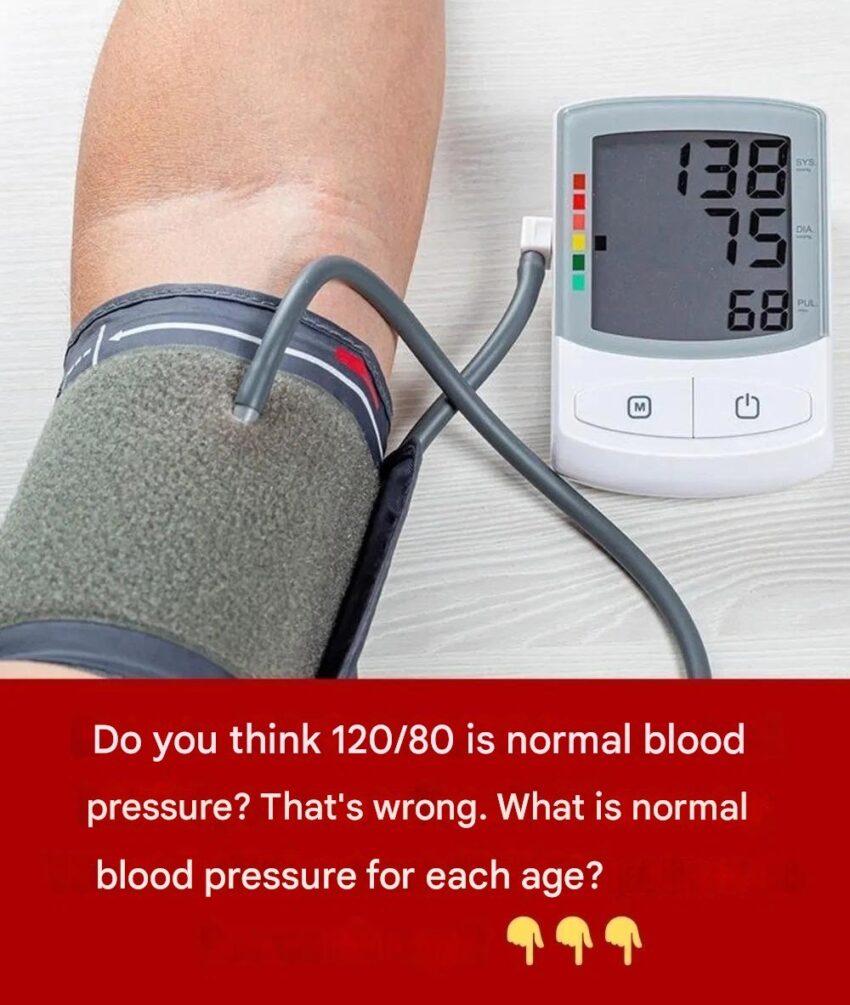
“Normal” blood pressure doesn’t change dramatically by age the way people often think. In most modern medical guidelines, the same target range is used for adults of all ages, with only small differences in interpretation for children and older adults.
🫀 Normal blood pressure (general guide)
Adults (18+ years)
- Normal: less than 120/80 mmHg
- Elevated: 120–129 / less than 80
- High blood pressure (Hypertension): 130/80 or higher
👶 Children (approximate ranges vary by height/age)
Children don’t have a single fixed number like adults. Doctors use percentiles, but a rough guide:
- Toddlers (1–5 years): ~95–105 / 55–70
- School age (6–12 years): ~97–112 / 57–75
- Teens (13–17 years): close to adult range (~110–120 / 65–80)
👵 Older adults (60+)
- Often considered normal: 120–130 / 70–80
- Slightly higher systolic (top number) is more common with age due to stiffer arteries
- Many doctors still aim for under 130/80 if tolerated
⚠️ Key takeaway
- There is no “age-adjusted normal” that makes high numbers automatically OK
- The risk of heart disease and stroke increases when BP stays above 130/80
✔️ When to be concerned
- Repeated readings above 130/80 → worth checking lifestyle or treatment
- Readings above 180/120 → urgent medical attention needed
If you want, I can also show you how to correctly measure blood pressure at home so your readings are accurate.
