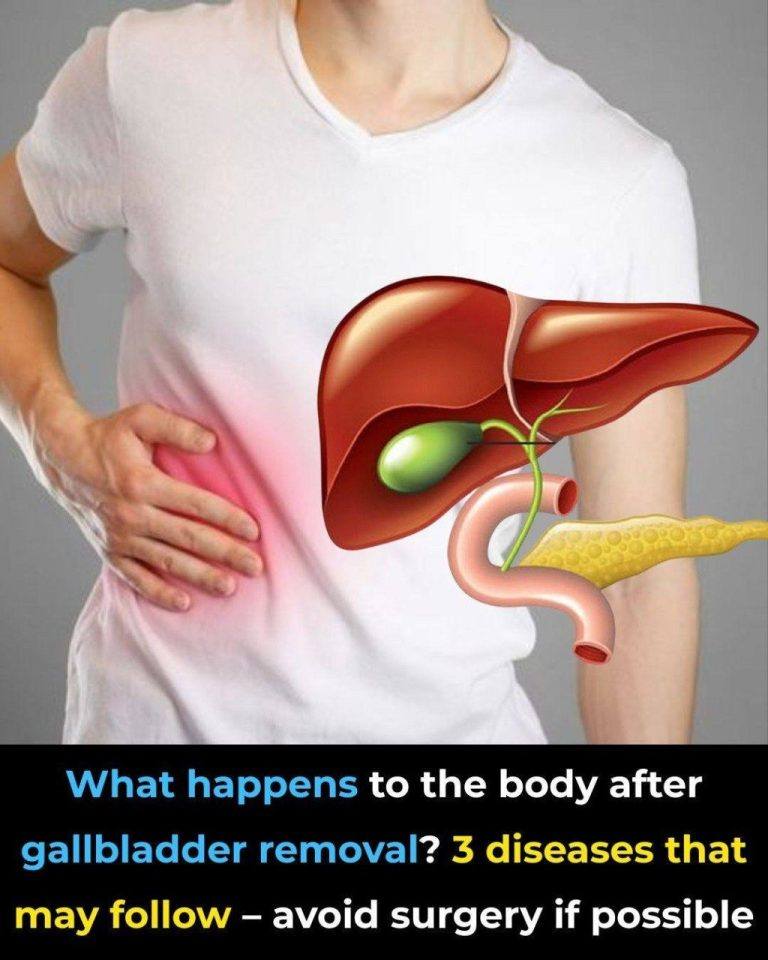
That headline is misleading and fear-based. It suggests that gallbladder removal leads to specific diseases and should be avoided—but that’s not how real medicine works.
Let’s look at the facts.
🫀 What is gallbladder removal?
Cholecystectomy is the surgical removal of the gallbladder. It’s commonly done for:
- Painful gallstones
- Inflammation
- Blocked bile ducts
It’s one of the most routine and generally safe surgeries.
🧠 What actually changes after surgery
The gallbladder stores bile. After removal:
- The liver still produces bile
- Bile flows directly into the intestine instead of being stored
Most people digest food normally, but some notice mild changes.
⚠️ Possible effects (not “guaranteed diseases”)
💩 1. Digestive changes
- Some people have loose stools or mild diarrhea
- Especially after fatty meals
- Usually improves over time
🫃 2. Difficulty digesting very fatty foods
- Without bile storage, fat digestion can be less efficient at first
- Many people adjust within weeks to months
🔄 3. Bile reflux or irritation (less common)
- Some may experience stomach discomfort or reflux
- Not very common and often manageable
🚫 About the “3 diseases” claim
There is no fixed list of diseases that everyone develops after this surgery.
The viral claim is misleading because:
- It exaggerates normal, temporary side effects
- It presents risks as inevitable outcomes
- It discourages necessary medical treatment
🧠 When surgery is actually necessary
Doctors recommend Cholecystectomy when:
- Gallstones cause repeated pain
- There is infection or inflammation
- There’s a risk of serious complications (like pancreatitis)
👉 In these cases, avoiding surgery can be more dangerous.
✔️ Bottom line
Most people live normal, healthy lives without a gallbladder. While mild digestive changes can happen, the claim about “3 diseases” is exaggerated and not medically accurate.
If you want, I can also explain:
- what to eat after gallbladder removal
- or how to tell if gallstone symptoms actually need surgery
- or natural ways to manage mild gallbladder issues safely
