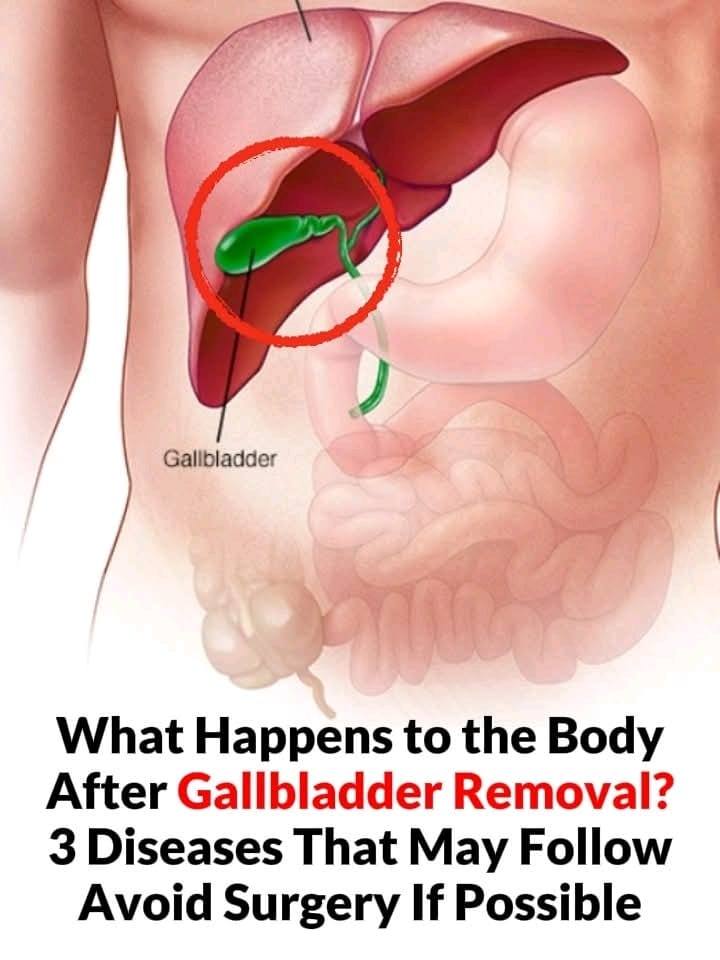
That headline is misleading in a couple of ways. Gallbladder removal (cholecystectomy) is a very common and generally safe surgery, and it’s usually done because gallstones or gallbladder disease are already causing harm. It is not something doctors recommend “avoiding if possible” when it’s medically needed.
Here’s what actually happens in the body afterward—and what conditions can occur in some people.
🟡 What the gallbladder does
Your gallbladder stores bile (a digestive fluid made by the liver) and releases it when you eat fatty foods.
After removal:
- Bile no longer gets stored
- It flows directly from the liver into the intestine
Most people adapt well to this change.
🩺 Possible changes after surgery (not “diseases everyone gets”)
1. 💩 Bile acid diarrhea (post-surgery change)
Some people experience loose stools because bile flows more continuously into the gut.
- Usually mild and temporary
- Can be managed with diet or medication if needed
2. 🍽️ Fat digestion sensitivity
A small number of people notice difficulty with:
- Very fatty or greasy meals
- Bloating or discomfort after heavy foods
This usually improves over time with dietary adjustment.
3. 🔥 Post-cholecystectomy syndrome (in a minority of cases)
This is a collection of symptoms some patients report:
- Abdominal discomfort
- Indigestion
- Nausea or bloating
It does not mean a new disease is caused, but rather lingering digestive sensitivity or another underlying issue that wasn’t fully resolved.
⚠️ What the headline gets wrong
- It’s not accurate that gallbladder removal leads to “3 diseases” in most people
- For the majority, life continues normally with minor or no long-term effects
- Surgery is typically done because untreated gallbladder disease can cause serious complications, including infection or blockage
🧠 Bottom line
- Gallbladder removal is usually safe and beneficial when medically necessary
- Some digestive adjustments can happen, especially early on
- Serious long-term problems are uncommon, not expected outcomes
If you want, I can explain what symptoms actually mean you should or shouldn’t remove the gallbladder, or how to manage digestion after surgery in a simple diet plan.
