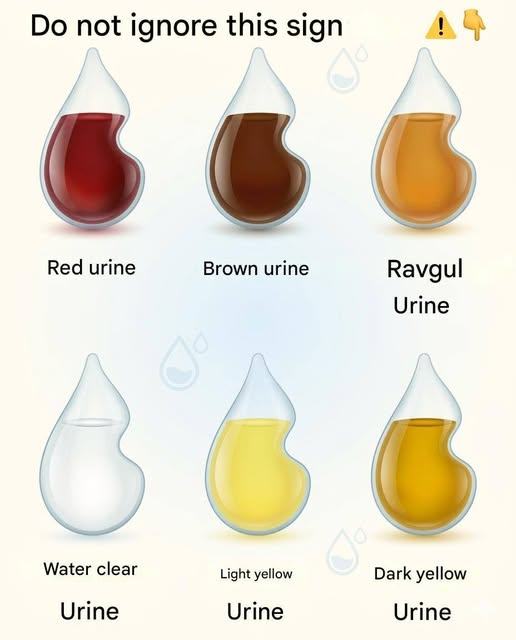
Urine color can give useful clues about hydration, diet, and sometimes health issues—but it’s not a diagnosis on its own.
Here’s a simple guide to what different colors can mean:
💧 1. Clear or very light yellow
Usually normal
- Well hydrated
- Drinking plenty of water
⚠️ If always completely clear, you might be overhydrating slightly.
🟡 2. Light straw / pale yellow (ideal)
Best sign of healthy hydration
- Normal kidney function
- Good fluid balance
🌕 3. Dark yellow / amber
Common sign of dehydration
- Not drinking enough water
- Sweating a lot (heat, exercise)
- Morning urine is often darker (normal)
🟠 4. Orange
Possible causes:
- Dehydration
- Certain vitamins (especially B-complex)
- Some medications
- Rarely, liver or bile issues if persistent
🩷 5. Pink or red
Possible causes:
- Foods like beetroot or berries
- Blood in urine (important to check)
- Could be linked to infection like Urinary Tract Infection or kidney stones in some cases
⚠️ If not food-related and it continues → needs medical check.
🟤 6. Dark brown / cola color
Possible causes:
- Severe dehydration
- Liver-related issues
- Muscle breakdown (rare but serious)
⚠️ This should be checked promptly if unexplained.
🟢 7. Blue or green (rare)
Possible causes:
- Certain medications
- Food dyes
- Rare metabolic or infection-related causes
🫧 8. Foamy urine
Sometimes normal if urine hits water fast, but:
- Persistent foaming may suggest excess protein
- Could relate to kidney stress if ongoing
🧠 Key takeaway
- Pale yellow = healthy range
- Sudden or persistent color changes matter more than one-off changes
🚨 When to see a doctor
- Blood-like (red/pink) urine not linked to food
- Brown/cola color without explanation
- Burning, pain, or fever with changes
- Persistent foamy urine
If you want, I can also show you a quick “hydration check” method using urine color + thirst signs so you can monitor it easily at home.
