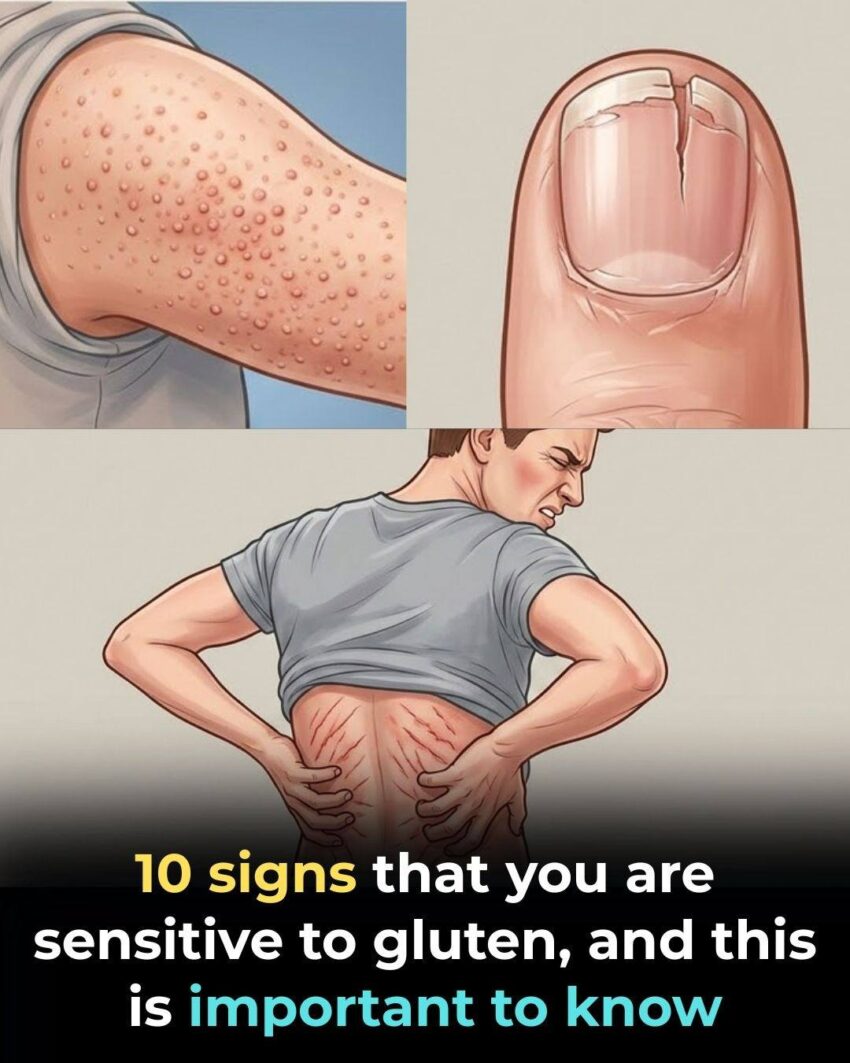
“Gluten sensitivity” is often talked about online, but the symptoms people mention can come from many different causes. The medically recognized conditions are:
- Celiac disease (autoimmune reaction to gluten)
- Wheat allergy (allergic reaction to wheat proteins)
- Non-celiac gluten sensitivity (real for some people, but harder to diagnose)
Here are the common warning signs people may notice if they react poorly to gluten or wheat:
🌾 Possible digestive symptoms
- Bloating or feeling “swollen” after eating bread or pasta
- Gas or stomach discomfort
- Diarrhea or constipation
- Stomach cramps
😣 Whole-body symptoms
- Fatigue or low energy after meals
- “Brain fog” or difficulty concentrating
- Headaches in some people
🧴 Skin-related signs
- Itchy skin or rashes
- Eczema-like flare-ups (in sensitive individuals)
⚖️ Nutrient-related issues (more serious cases like celiac disease)
- Iron deficiency (anemia)
- Unexplained weight loss
- Weakness or low energy over time
⚠️ Important reality check
These symptoms are:
- Not specific to gluten alone
- Can also be caused by IBS, stress, food intolerances, or other digestive issues
That’s why self-diagnosing gluten sensitivity can be misleading.
🧠 When to see a doctor
It’s important to get checked if you have:
- Ongoing digestive problems
- Unexplained fatigue or weight loss
- Family history of celiac disease
Doctors may run tests for:
- Celiac disease
- Wheat allergy
- Other digestive conditions
✔️ Bottom line
Gluten sensitivity can cause digestive and energy-related symptoms in some people, but similar symptoms have many other causes. A proper medical test is the only way to confirm it.
If you want, I can also explain:
- how gluten intolerance differs from celiac disease
- or which foods actually contain hidden gluten
- or how to do a safe elimination diet without harming nutrition
