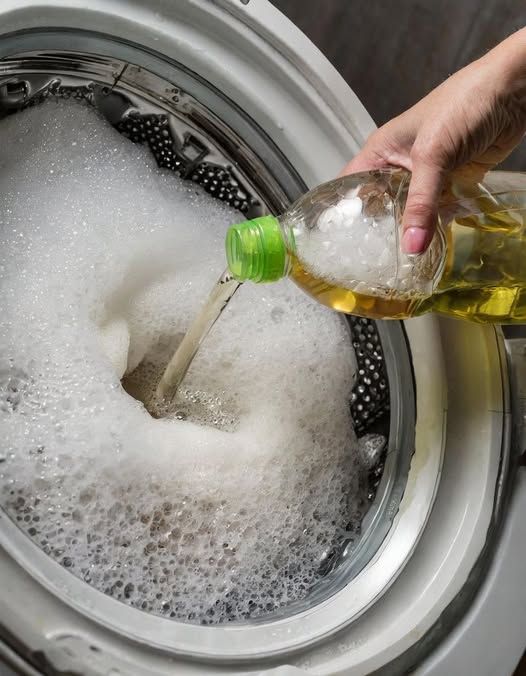
Vinegar can help laundry, but headlines like this are a bit exaggerated. It’s not a miracle cleaner, and using it the wrong way can actually damage fabrics or your washing machine.
Here’s the correct, safe way to use vinegar for whites and towels:
🧺 What vinegar actually does in laundry
White vinegar (acetic acid) can:
- Help remove detergent residue from towels
- Soften fabrics by breaking down buildup
- Reduce mild odors
- Slightly brighten dull whites (by removing buildup, not bleaching)
But it does not bleach stains like chlorine bleach.
✅ The right way to use vinegar
1. As a rinse aid (best method)
- Add ½ cup white vinegar to the fabric softener compartment
- Run your normal wash cycle
- It releases during the rinse, not the wash
2. For smelly towels
- Wash towels normally first
- Rewash with ½–1 cup vinegar (no detergent)
- Then do a second rinse cycle
3. For buildup-heavy laundry
- Soak items in warm water + 1 cup vinegar for 30–60 minutes
- Then wash normally
⚠️ Common mistakes to avoid
- ❌ Don’t mix vinegar with bleach (creates toxic gas)
- ❌ Don’t use it every single wash (can wear elastic over time)
- ❌ Don’t pour directly onto clothes in high concentration
- ❌ Avoid on delicate fabrics like silk or wool
🧠 Important reality check
- Vinegar helps with residue and odors, not deep stains
- “Whiter whites” usually comes from removing detergent buildup, not true whitening
- Overuse can damage rubber seals in some washing machines over time
🧼 Bottom line
Vinegar is a useful laundry booster, especially for towels and musty smells—but it’s not a replacement for proper detergent or stain removers.
If you want, I can give you a step-by-step “hotel-white towel” washing routine that actually works long-term.
