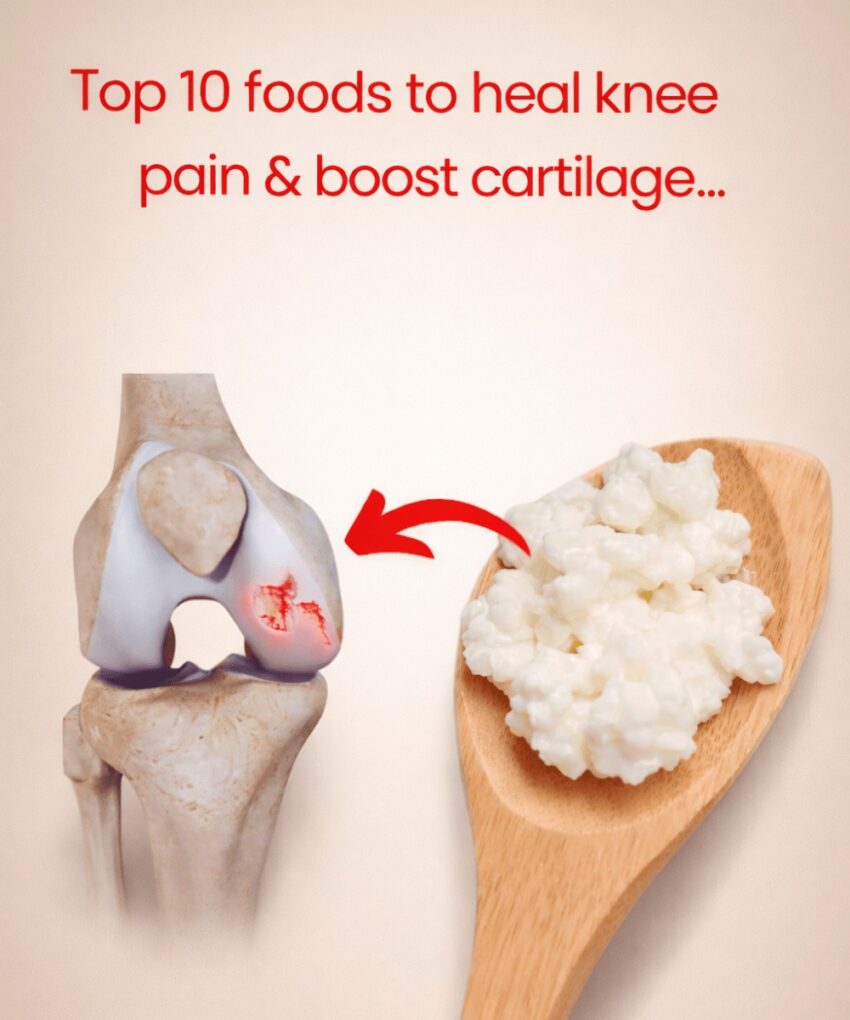
That kind of “top 10 foods that heal cartilage” list is usually overstated. No food can directly “regrow” worn cartilage or instantly heal knee damage. Cartilage has very limited blood supply, so it doesn’t repair itself quickly just from diet.
But—nutrition can help reduce inflammation, support joint health, and ease symptoms, especially alongside movement, weight management, and medical care when needed.
Here are foods with real evidence for supporting joint health and inflammation control:
1. Fatty fish (salmon, sardines, mackerel)
Rich in omega-3 fats, which may help reduce joint inflammation and stiffness.
2. Olive oil (extra virgin)
Contains anti-inflammatory compounds similar to mild natural NSAID-like effects.
3. Nuts (walnuts, almonds)
Provide healthy fats and antioxidants that support overall joint health.
4. Berries (blueberries, strawberries, cherries)
High in antioxidants that may help reduce inflammation markers.
5. Leafy greens (spinach, kale)
Contain vitamin K and antioxidants linked to better joint and bone health.
6. Turmeric
Contains curcumin, which has shown modest anti-inflammatory effects in some studies.
7. Ginger
May help reduce pain and inflammation in osteoarthritis for some people.
8. Beans and lentils
Good plant protein + fiber, which can help reduce overall inflammation burden.
9. Bone broth
Contains collagen-related compounds, but evidence for “rebuilding cartilage” is limited.
10. Whole grains (oats, brown rice)
Help reduce inflammatory spikes compared to refined carbs.
Important reality check
- These foods do not “rebuild cartilage” directly
- They may help with symptoms and inflammation
- Knee pain often depends more on:
- muscle strength (especially quadriceps)
- body weight load on joints
- injury or arthritis type
- activity level and physiotherapy
Bottom line
Think of these foods as supportive, not curative. They can help your joints feel better over time, but they’re not a replacement for proper diagnosis or treatment if pain is ongoing.
If you want, tell me your age/activity level and I can suggest a simple knee-strengthening routine that actually has stronger evidence than most “superfood” lists.
