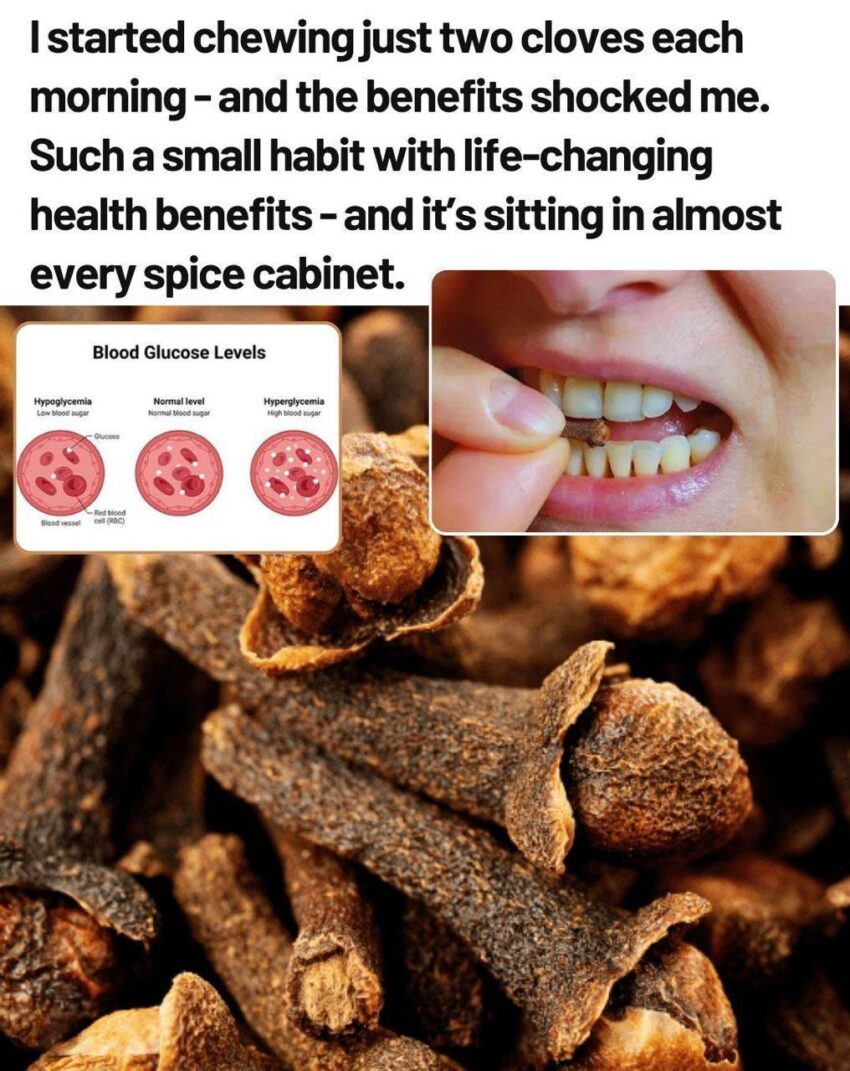
Here’s a clear, no-hype guide to cloves—what they are, what they do, and what science actually supports.
🌿 What are cloves?
Cloves are dried flower buds from the clove tree (Syzygium aromaticum). They’re used as a spice in cooking and in traditional remedies for centuries.
🧪 Key active compound
Cloves are especially rich in:
- Eugenol – the main compound responsible for their smell, taste, and many studied effects
💪 Possible benefits (what research suggests)
1. 🦷 Oral health support
Cloves have mild antibacterial and numbing effects.
- Often used in toothpaste, mouth rinses, or traditional remedies for tooth discomfort
- Eugenol can help reduce pain sensation temporarily
2. 🧴 Antioxidant properties
Cloves are very high in antioxidants, which help protect cells from oxidative stress.
3. 🍽️ Digestion support (traditional use)
May help with:
- Gas and bloating
- Mild stomach discomfort
(Scientific evidence is limited, but traditional use is strong)
4. 🦠 Antimicrobial effects (lab studies)
In lab settings, clove extracts can inhibit some bacteria and fungi—but this doesn’t automatically translate into medical treatment in humans.
⚠️ Important limitations
- Cloves are not a cure for infections or diseases
- High doses or clove oil can be irritating or harmful
- “Natural” does not always mean “safe in large amounts”
🍵 Common ways people use cloves
- In tea (boiled with water or ginger)
- In cooking (curries, rice, baked goods)
- Chewing 1–2 cloves for breath freshness (strong taste)
- Clove oil (used carefully and usually diluted)
💡 Safety notes
- Avoid excessive clove oil ingestion (can be toxic in high amounts)
- May interact with blood-thinning medications in large doses
- Small culinary amounts are generally safe for most people
🧠 Bottom line
Cloves are a useful spice with interesting antimicrobial and antioxidant properties, but they work best as part of a healthy diet—not as a standalone “remedy.”
If you want, I can compare cloves with cinnamon, ginger, or turmeric so you can see which actually has stronger evidence for different health uses.
