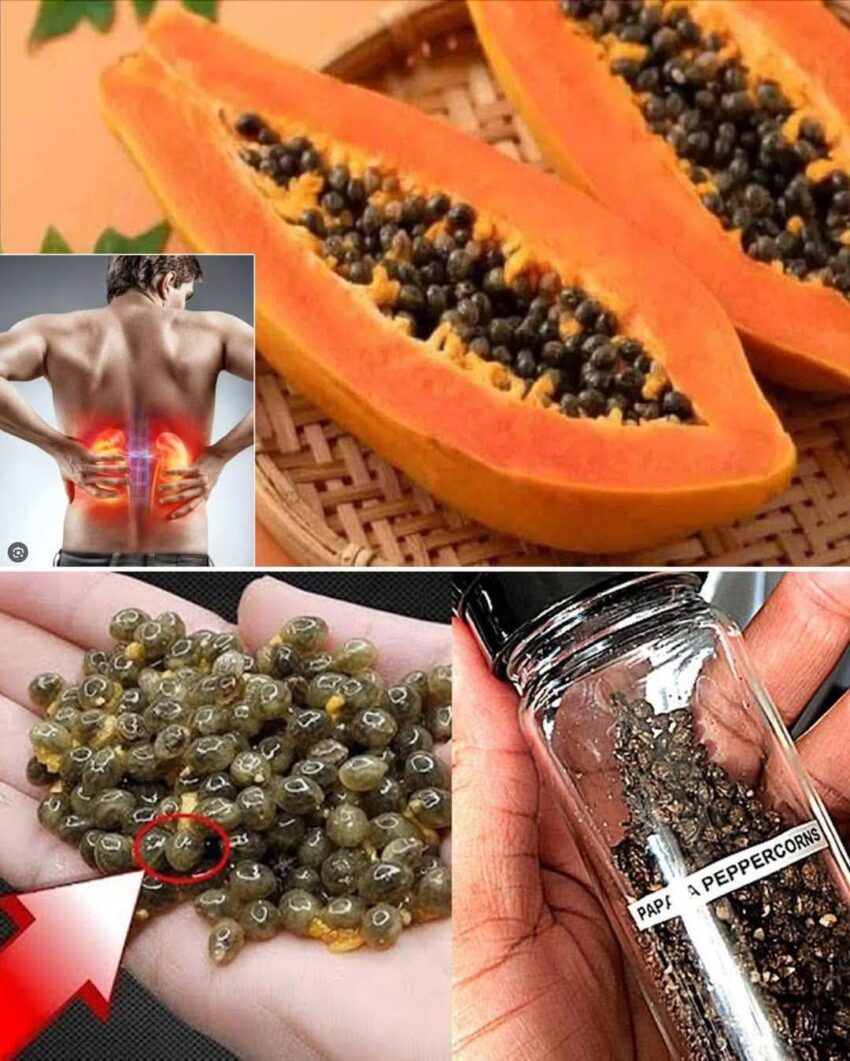
Papaya seeds are often promoted online as a “superfood,” but the real story is more balanced: they do contain beneficial compounds, yet they also need to be used carefully.
Here’s what science and nutrition evidence actually suggest.
🧠 Potential health benefits of papaya seeds
1. Rich in antioxidants
Papaya seeds contain compounds like polyphenols and flavonoids, which may help reduce oxidative stress in the body.
👉 This supports overall cellular health, but it’s not a cure for disease.
2. May support digestion
They contain papain, an enzyme also found in papaya fruit, which helps break down protein.
👉 This is why small amounts are sometimes used traditionally for digestion support.
3. Possible antimicrobial effects
Early lab studies suggest papaya seeds may have activity against certain bacteria and parasites.
👉 Important: this is mostly lab-based evidence, not strong clinical proof in humans.
4. Liver and kidney support (limited evidence)
Animal studies show possible protective effects, but human evidence is very limited and not conclusive.
⚠️ Important safety concerns
Papaya seeds are not a harmless snack if taken in large amounts:
- Can irritate the stomach
- May cause digestive upset (nausea, diarrhea)
- Not recommended in high doses or long-term use
- Not advised for pregnant individuals
- May interact with certain medications
🥄 How they are usually used
If used at all, people typically:
- Dry and grind a few seeds
- Use small amounts (like a pinch) in smoothies or food
They are bitter and peppery, not something most people eat regularly.
🧠 Bottom line
Papaya seeds may have some interesting compounds, but:
- Evidence in humans is limited
- Benefits are modest, not “miraculous”
- Safety matters more than hype
They are best viewed as a traditional food ingredient with potential benefits—not a daily health supplement.
If you want, I can compare papaya seeds vs. flax seeds vs. chia seeds so you can see which one actually has stronger science behind it.
