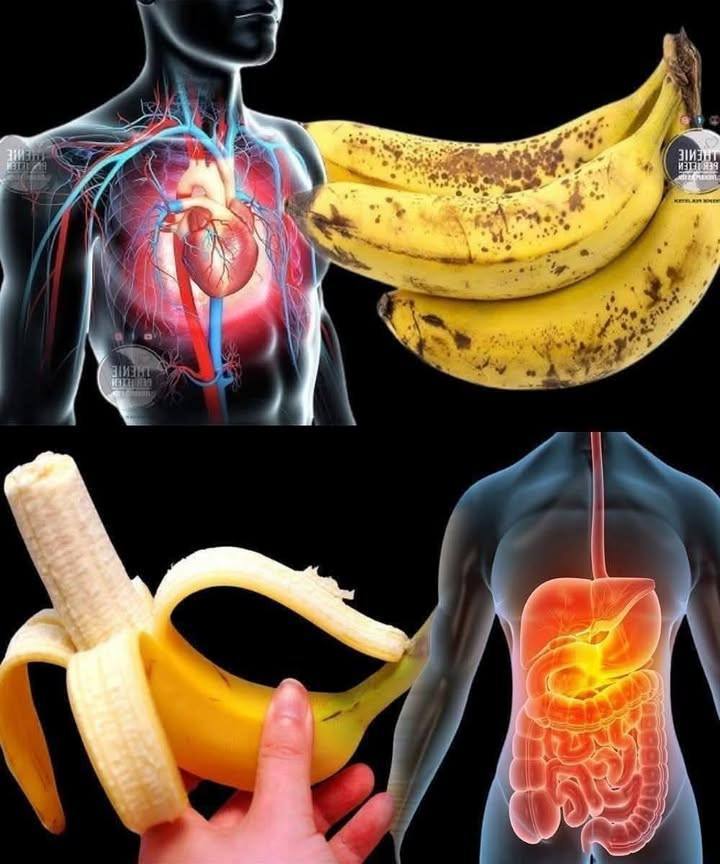
Bananas are often used in health posts because they connect well with real human nutrition—but some claims online are exaggerated. Here’s a clear, science-based look at how bananas actually interact with the human body:
🍌 Bananas and the Human Body
⚡ 1. Energy source
Bananas contain natural carbohydrates (glucose, fructose, sucrose), which:
- Provide quick energy
- Are useful before or after exercise
That’s why athletes often eat them.
❤️ 2. Heart health (potassium)
Bananas are rich in potassium, a mineral that:
- Helps regulate blood pressure
- Supports proper muscle and nerve function
- Works with sodium to balance fluids in the body
Low potassium intake is linked to higher blood pressure risk.
🧠 3. Brain and mood support
Bananas contain small amounts of:
- Vitamin B6 → helps make neurotransmitters like serotonin
- Natural sugars → support brain energy use
They may slightly support mood and focus, but they are not a treatment for mental health conditions.
🦠 4. Digestion and gut health
- Contain fiber (especially pectin)
- Can support smoother digestion
- Slightly help gut bacteria balance
Unripe bananas also contain resistant starch, which acts like fiber.
⚖️ 5. Weight and fullness
Bananas:
- Are moderately filling
- Can reduce hunger for a short time
- Are relatively low in calories compared to snacks
But they are not a weight-loss food by themselves.
🚫 Common myths
- ❌ “Bananas burn fat” → not true
- ❌ “Bananas cure diseases” → not true
- ❌ “Bananas are too high in sugar to be healthy” → misleading (they’re natural sugar + fiber)
🧠 Bottom line
Bananas are a nutrient-rich, convenient fruit that supports energy, heart health, and digestion—but they work best as part of a balanced diet, not as a cure or “superfood fix.”
If you want, I can compare bananas with apples or oranges so you can see which is actually “healthiest” depending on your goal.
