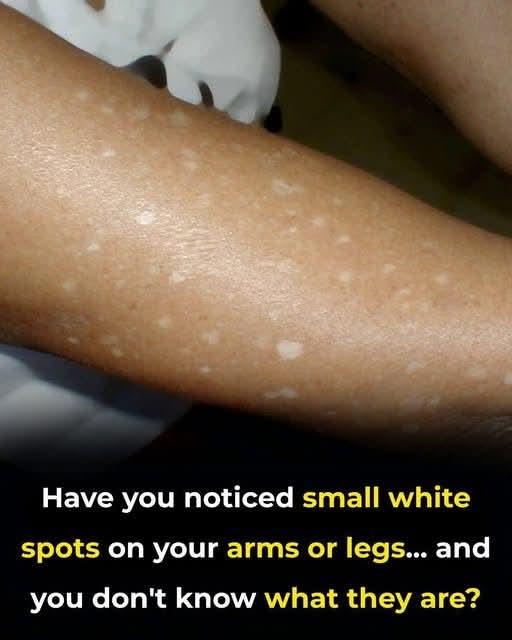
Small white spots on the arms and legs are fairly common, and in most cases they are not dangerous. But the cause can vary, and the appearance alone isn’t enough to diagnose anything confidently.
Here are some of the most common explanations doctors consider:
1) Idiopathic Guttate Hypomelanosis (IGH)
- Small, flat white spots, often on sun-exposed areas like arms and legs
- More common with age and sun exposure
- Harmless and not contagious
- Often called “sun spots” of loss of pigment
2) Tinea versicolor (fungal overgrowth)
- Caused by a normal skin yeast that grows unevenly
- Can create lighter or darker patches, sometimes slightly scaly
- More noticeable in heat or sweating
- Usually treatable with antifungal creams or shampoos
3) Vitiligo
- Causes well-defined white patches due to loss of pigment cells
- Can spread slowly or stay stable
- Not painful or contagious, but autoimmune in nature
- Often needs dermatology care for management
4) Pityriasis alba
- Common in children and teens
- Mild, slightly dry, pale patches—often on face or arms
- Linked to eczema or dry skin
- Usually improves on its own over time
5) Post-inflammatory hypopigmentation
- Light spots left after skin injury, rash, or irritation
- Often temporary and slowly repigments
When it’s worth getting checked
You should consider a doctor or dermatologist visit if:
- Spots are spreading quickly
- They become sharp white patches with clear borders
- There is itching, scaling, or discomfort
- You’re unsure what triggered them
Bottom line
Most small white spots on arms and legs are related to sun exposure, mild skin conditions, or harmless pigment changes, not anything serious—but the exact cause matters for treatment.
If you want, you can describe what yours look like (size, texture, whether they itch, how long they’ve been there), and I can help narrow down the most likely possibilities.
