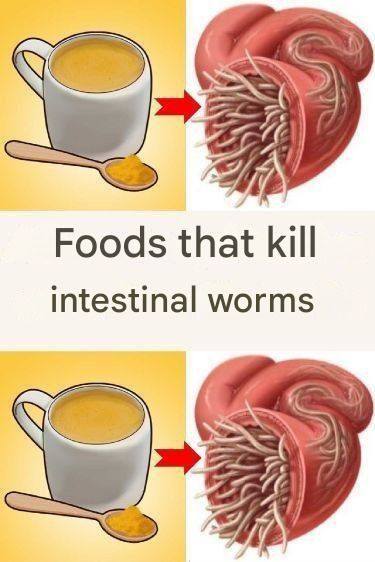
That’s another clickbait-style health claim, and it’s important to be careful with it.
There are foods that may support gut health, but no food reliably “kills intestinal worms” in the way proper medical treatment does.
A true intestinal parasite infection is a condition called Intestinal parasitic infection, and it usually requires diagnosis and specific anti-parasitic medication.
🧠 Reality check
- Foods alone do not reliably eliminate intestinal worms
- Untreated infections can persist or worsen
- Proper treatment depends on the exact parasite type
🩺 What actually works
Doctors use antiparasitic medicines, such as:
- albendazole
- mebendazole
- ivermectin (for specific cases)
These are proven and targeted—not general foods or herbs.
🌿 Foods often mistakenly promoted as “worm killers”
Some foods are commonly claimed online, but evidence is limited:
🧄 Garlic
- May have mild antimicrobial effects in lab studies
- Not reliable as a treatment alone
🎃 Pumpkin seeds
- Contain compounds that may affect parasites in some studies
- Not strong enough to cure infections
🍍 Papaya seeds
- Studied for potential effects, but human evidence is weak
🥥 Coconut
- Sometimes claimed to “paralyze worms,” but not proven clinically
⚠️ Important warning
Relying on foods instead of treatment can:
- delay proper care
- allow infection to spread or worsen
- cause ongoing nutrient loss or anemia in some cases
🚨 Symptoms that need medical attention
- persistent abdominal pain
- unexplained weight loss
- diarrhea or fatigue
- visible worms in stool (in some cases)
- itching around the anus (especially at night)
💡 Bottom line
There is no food that reliably kills intestinal worms. Some foods may support general gut health, but confirmed infections require medical treatment.
If you want, I can explain how intestinal parasites are actually diagnosed and treated safely step-by-step.
