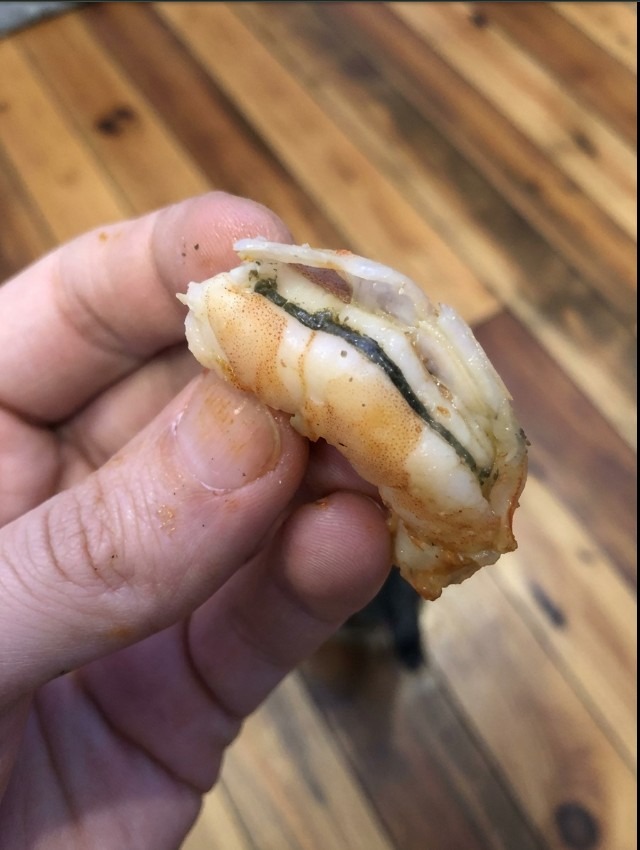
The shrimp’s “black vein” is actually its digestive tract, not a vein at all.
🦐 What the “black vein” really is
That dark line running along the back of a shrimp is:
👉 The intestinal tract (gut)
It can contain:
- Partially digested food
- Sand or grit
- Waste material
In larger shrimp, it may look dark because of what’s inside.
🍽️ Is it safe to eat?
✔️ Yes — it is usually safe
Eating the vein is not harmful in most cases, especially if the shrimp is:
- Properly cooked
- Sourced from clean, reputable suppliers
It’s not a health risk in the way people sometimes think.
⚠️ Why people remove it anyway
Even though it’s safe, many people prefer to “devein” shrimp because:
- It can taste slightly gritty
- It may affect texture
- It looks unappetizing to some people
🧠 Important clarification
- It is not a blood vessel
- It does not contain blood
- It is simply the shrimp’s intestinal tract
🧼 When you might want to remove it
You may choose to remove it if:
- The shrimp is large (prawns often have more noticeable veins)
- You want a cleaner texture for fine dishes
- You are serving guests and prefer appearance over convenience
✔️ Bottom line
The shrimp’s “black vein” is its digestive tract.
👉 It is safe to eat when properly cooked, but many people remove it for texture and appearance.
If you want, I can also show:
- how to devein shrimp quickly at home
- or whether shell-on vs peeled shrimp changes taste or nutrition
- or myths about seafood safety that are often misunderstood
