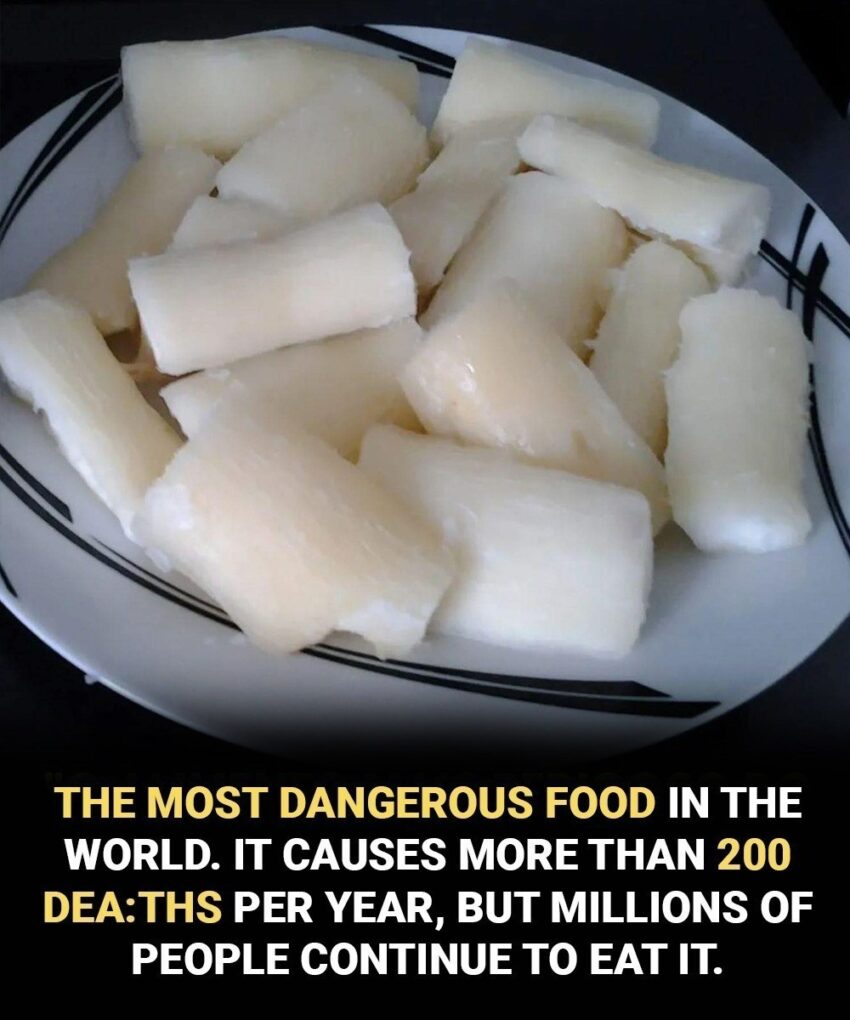
Cassava (also called yuca or manioc) is one of the most important staple foods in tropical regions, feeding hundreds of millions of people worldwide. It’s rich in carbohydrates and can be a reliable source of calories—but there’s an important catch:
👉 Raw or improperly prepared cassava can be toxic.
🌿 Why cassava can be dangerous
Cassava naturally contains compounds called cyanogenic glycosides. When the plant is damaged (peeled, crushed, or chewed), these compounds can release cyanide, a toxic substance.
If cassava is not processed correctly, it can lead to:
- Nausea and vomiting
- Dizziness and weakness
- In severe cases, neurological problems or poisoning
This is why it’s considered both a life-saving crop and a potential risk if mishandled.
🍽️ How cassava becomes safe to eat (general understanding)
Traditional cultures have developed methods over generations to make cassava safe. The key idea is:
👉 Remove or reduce the natural toxins before eating.
This is typically done through a combination of:
- Peeling (the outer skin contains higher toxin levels)
- Soaking or fermenting (helps break down harmful compounds)
- Thorough cooking with heat (further reduces toxins)
When properly processed, cassava becomes safe and nutritious.
🧠 Sweet vs bitter cassava
There are two main types:
🥔 Sweet cassava
- Naturally lower toxin levels
- Safer, but still should be cooked
- Common in household cooking
⚠️ Bitter cassava
- Much higher cyanide content
- Requires careful traditional processing before consumption
- Often used for flour or processed foods after detoxification
🌍 Why people still rely on cassava
Despite the risks, cassava is widely grown because it:
- Survives drought and poor soil
- Produces high yields
- Stores well underground
- Provides a major calorie source in food-insecure regions
For many communities, it is literally a survival crop.
⚠️ Key safety takeaway
Cassava is safe only when properly prepared and fully cooked. Problems usually arise when:
- It is eaten raw or undercooked
- Bitter varieties are not properly processed
- Improper home preparation is used without traditional knowledge
✔️ Bottom line
Cassava is a powerful example of a food that is:
- Extremely valuable for global food security
- But naturally contains toxins that must be carefully removed
When handled correctly, it is safe and nutritious. When not, it can be dangerous.
If you want, I can also explain:
- how cassava compares to potatoes or rice nutritionally
- or which countries rely on it the most
- or why some processed cassava products (like tapioca) are always safe
