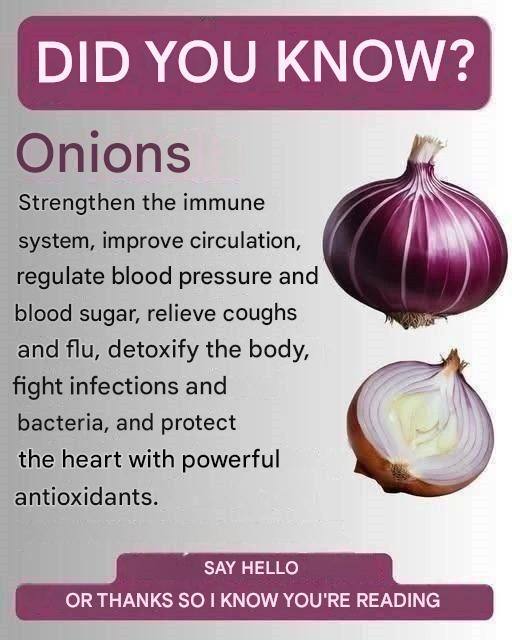
Onions aren’t a miracle cure, but they’re a nutritious, widely used vegetable with several evidence-based benefits when part of a balanced diet.
🧅 What onions are
Onion are bulbs rich in:
- Natural antioxidants
- Vitamins (especially vitamin C)
- Plant compounds like flavonoids
🧪 Key health benefits
❤️ 1. Heart health support
- Contain antioxidants that may help reduce inflammation
- Can support healthy blood pressure when part of a good diet
🛡️ 2. Rich in antioxidants
- Compounds like quercetin help protect cells from damage
- Linked to reduced oxidative stress
🦠 3. Mild antibacterial properties
- Natural compounds can inhibit some bacteria
- Useful in food safety and traditional remedies (but not a replacement for medicine)
🩸 4. May support blood sugar control
- Some studies suggest onions can help improve insulin sensitivity
- Helpful when included in a balanced diet (not a treatment)
🦴 5. Bone health (emerging evidence)
- Some research links onion consumption with better bone density, especially in older adults
🌱 6. Digestive support
- Contain prebiotics that feed beneficial gut bacteria
⚠️ Important reality check
Onions do NOT:
- Cure diseases
- Replace medications
- Provide instant health results
Benefits come from regular, long-term dietary patterns, not one food alone.
🍽️ Best ways to use onions
- Raw in salads (more pungent, higher antioxidant content)
- Lightly cooked in meals
- As a base for soups, curries, and sauces
🧠 Bottom line
Onions are a healthy, versatile food that support heart health, digestion, and overall wellness—but they work best as part of a balanced diet, not as a “super cure.”
If you want, I can also explain:
- raw vs cooked onions (which is healthier)
- or onion water myths vs facts
- or how onions compare to garlic nutritionally
