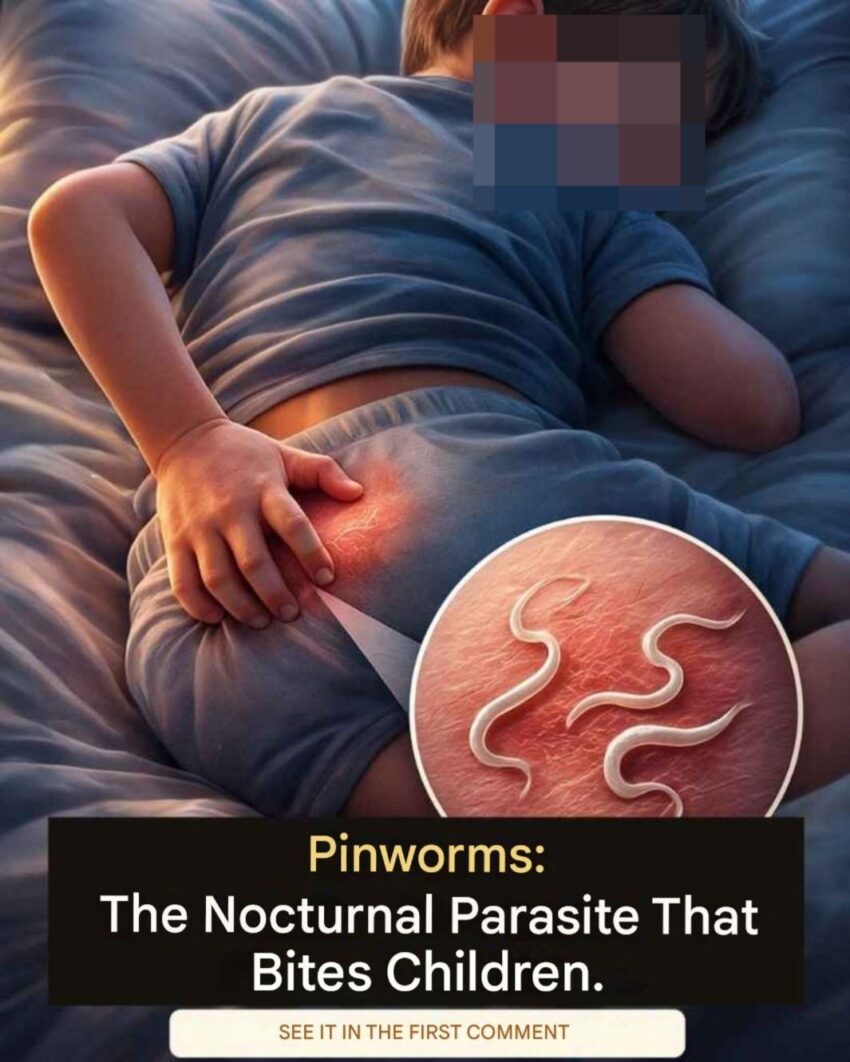
Pinworms are a very common intestinal infection in children, and while they sound alarming, they’re usually more uncomfortable than dangerous.
What pinworms are
Pinworms are tiny, thin parasitic worms (scientific name: Enterobius vermicularis) that live in the lower intestine. They spread easily between people, especially in households, schools, and daycare settings.
Why they cause nighttime itching
The most noticeable symptom is intense itching around the anus, especially at night. This happens because:
- Female pinworms travel out of the intestine at night
- They lay microscopic eggs on the skin around the anal area
- This process irritates the skin, triggering itching
Children often scratch without realizing it, and the eggs can get under fingernails, which is one reason the infection spreads so easily.
Common signs in children
- Itching around the bottom, worse at night
- Trouble sleeping or restlessness
- Irritability from poor sleep
- Sometimes mild stomach discomfort
- In some cases, you may actually see tiny white threads in stool or around the area at night
How it spreads
Pinworms spread through a simple cycle:
- Eggs are picked up from contaminated hands, surfaces, or bedding
- They are swallowed (often accidentally)
- They hatch inside the intestines
- The cycle repeats
Because eggs are so small and sticky, they can survive on clothes, toys, bedding, and even under fingernails.
Treatment (good news: it’s easy)
Doctors usually treat pinworms with:
- A single dose of anti-parasitic medicine, often repeated after 2 weeks
- Treating everyone in the household at the same time to prevent reinfection
Prevention steps
- Frequent handwashing (especially before eating and after using the toilet)
- Keeping nails short and clean
- Daily morning bathing (to remove eggs)
- Washing bedding, clothes, and towels in hot water
- Avoiding scratching as much as possible
Bottom line
Pinworms are very common in children and spread easily, but they’re treatable, not dangerous, and usually clear up quickly with proper hygiene and medication.
If you want, I can also explain how doctors diagnose them at home using the “tape test,” which is surprisingly simple and commonly used.
