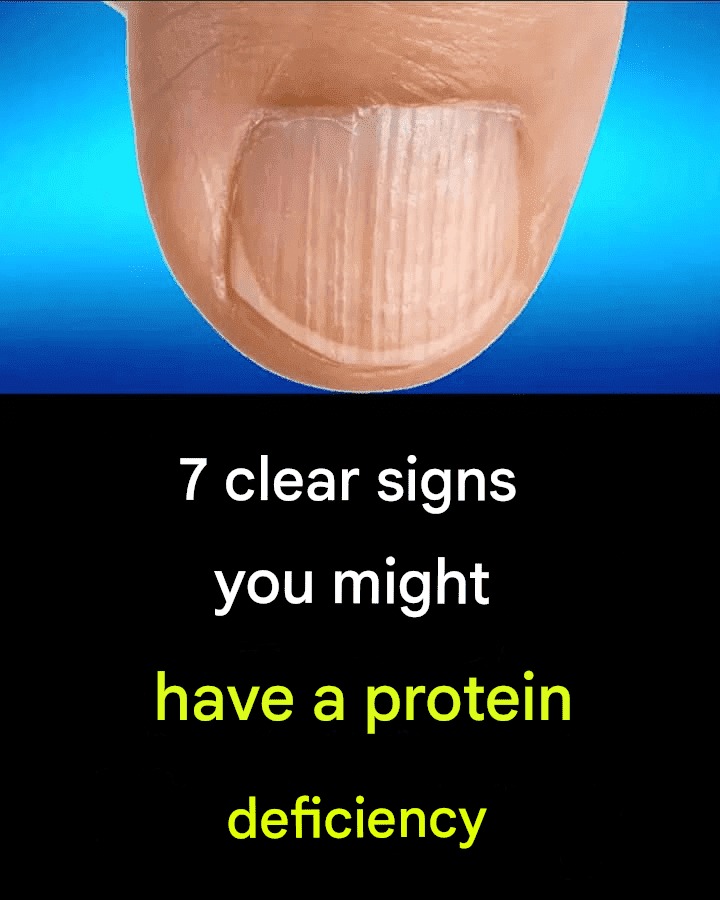
Protein deficiency is rare in people who eat enough calories, but it can happen if someone has a very limited diet or certain medical conditions. The key point is: these signs are not proof on their own, but they can be clues.
Here are 7 possible signs associated with low protein intake:
- Feeling weak or tired often
Protein helps maintain muscles and energy balance. Low intake may contribute to fatigue. - Slow healing of cuts or injuries
Your body uses protein to repair tissues, so healing can take longer. - Frequent muscle loss or feeling “weaker”
If protein is very low, the body may start breaking down muscle for fuel. - Hair thinning or brittle hair
Hair is made of protein (keratin), so deficiency can affect hair quality over time. - Swelling in legs, feet, or face (edema)
Severe protein deficiency can disrupt fluid balance in the body. - Increased hunger or cravings
Protein helps you feel full; low intake can make you feel unsatisfied after meals. - Weakened immune system (getting sick more often)
Protein is needed to build immune cells and antibodies.
Important context
Most of these symptoms can also be caused by other issues (stress, poor sleep, vitamin deficiencies, illness), so it’s not something to self-diagnose from a list.
If you’re actually worried about your nutrition, the safest step is simply making sure your meals include protein sources like:
- Eggs, chicken, fish
- Lentils (daal), beans, chickpeas
- Milk, yogurt
- Nuts and seeds
If you want, tell me your typical daily diet and I can help you check if it looks balanced—without overcomplicating it.
