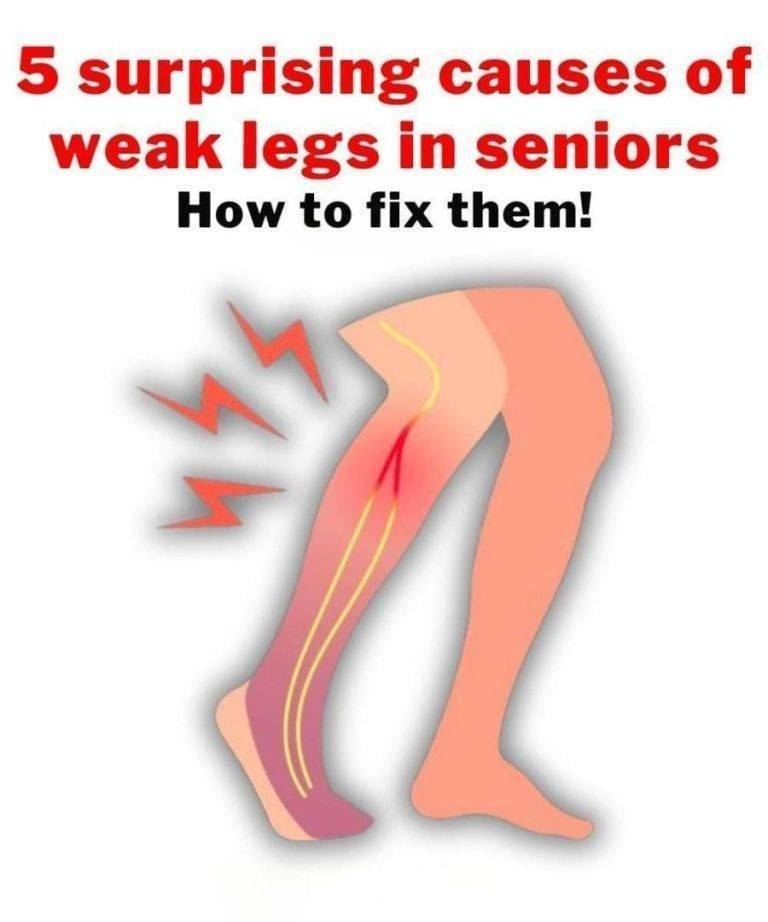
“Weak legs in seniors” is a common concern, but there isn’t one single cause. It usually comes from a mix of muscle, nerve, joint, and general health changes. Here are 5 common (and often overlooked) causes and what actually helps:
1. 🦵 Muscle loss (sarcopenia)
As people age, muscle mass naturally decreases—especially in the thighs and hips. This is one of the biggest reasons for weak legs.
What helps:
- Light resistance training (chair squats, wall push-ups)
- Walking regularly
- Adequate protein intake (if approved by a doctor)
2. 🩺 Vitamin deficiencies
Low levels of vitamin B12, vitamin D, or iron can lead to fatigue, weakness, or balance issues.
What helps:
- Blood test to check levels
- Supplements only if prescribed
- Sunlight exposure (for vitamin D)
3. 🚶 Poor circulation
Reduced blood flow in the legs can cause heaviness, weakness, or cramping.
What helps:
- Gentle walking or cycling
- Leg elevation when resting
- Managing blood pressure, diabetes, and cholesterol
4. 🧠 Nerve problems
Conditions like diabetes or spinal issues can affect nerves, leading to weakness or numbness.
What helps:
- Managing underlying conditions (like blood sugar control in Type 2 Diabetes)
- Physical therapy
- Medical evaluation if symptoms are worsening
5. 🦴 Joint problems
Arthritis or joint wear and tear can make movement painful, leading to reduced activity and weaker muscles over time.
What helps:
- Low-impact exercise (walking, swimming)
- Weight management
- Anti-inflammatory treatments (as advised by a doctor)
⚠️ When to see a doctor
Get checked if there is:
- Sudden or rapidly worsening weakness
- Frequent falls
- One-sided weakness
- Pain, numbness, or swelling
✅ Bottom line
Weak legs in older adults are usually multifactorial and reversible to some degree with movement, nutrition, and medical care—not just “aging itself.”
If you want, tell me the specific symptoms you’re seeing, and I can help narrow down the most likely cause.
