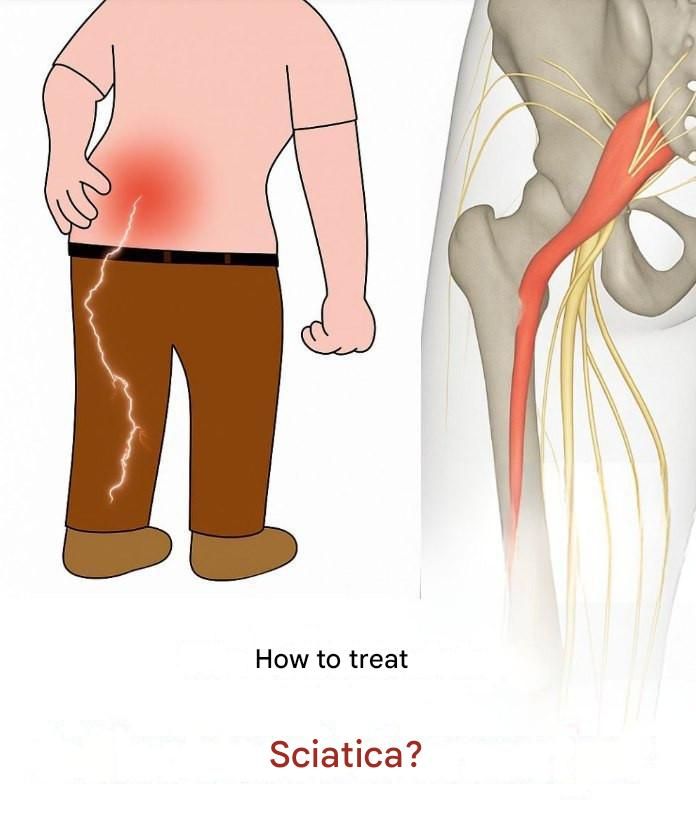
Sciatica pain usually comes from irritation of the sciatic nerve (often from the lower back). Gentle movement can help reduce pressure and improve mobility—but the key is slow, pain-free stretching, not forcing anything.
Here are 3 practical, commonly recommended exercises:
1. 🧘♂️ Knee-to-Chest Stretch
Helps loosen the lower back and reduce nerve tension.
How to do it:
- Lie on your back
- Bend one knee and gently pull it toward your chest
- Hold 20–30 seconds
- Switch legs
- Repeat 2–3 times per side
Tip: Keep the other leg relaxed on the floor.
2. 🪑 Seated Piriformis Stretch
Targets the piriformis muscle, which can press on the sciatic nerve.
How to do it:
- Sit on a chair
- Cross the painful leg over the other knee
- Keep your back straight and gently lean forward
- Hold 20–30 seconds
- Switch sides
Tip: You should feel a gentle stretch in the buttock, not sharp pain.
3. 🐱 Cat-Cow Stretch
Improves spinal flexibility and reduces nerve irritation.
How to do it:
- Get on hands and knees
- Inhale: arch your back (look up)
- Exhale: round your back (tuck chin)
- Move slowly for 1–2 minutes
Tip: Keep movements smooth and controlled.
⚠️ Important safety notes
- Stop if pain becomes sharp or worsens
- Avoid bouncing or forcing stretches
- If pain radiates strongly or includes numbness/weakness, see a doctor
- Severe or long-lasting sciatica may need medical treatment or physiotherapy
💡 Simple takeaway
These exercises help by:
- Reducing pressure on the sciatic nerve
- Relaxing tight muscles
- Improving lower back mobility
If you want, I can also give you a 10-minute daily routine for sciatica relief or explain what causes sciatica and how to prevent it from coming back.
