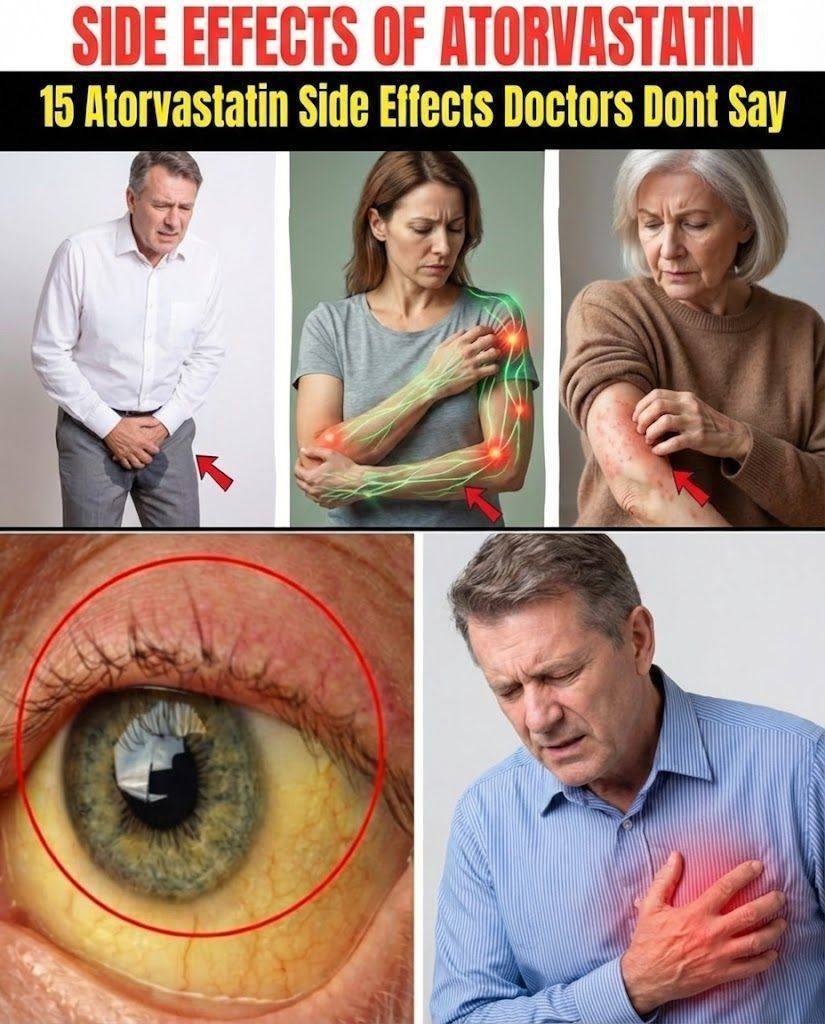
That headline is very misleading and alarmist. Let’s look at Atorvastatin (a commonly prescribed statin) in a clear, honest way—what’s real vs. exaggerated.
✅ What Atorvastatin Is For
- Lowers LDL (“bad”) cholesterol
- Helps prevent heart attacks and strokes
- Widely studied and used for many years
⚠️ Common (Usually Mild) Side Effects
These are the ones doctors do tell patients about:
- Muscle aches or mild pain
- Headache
- Digestive issues (nausea, diarrhea)
- Mild fatigue
👉 Many people have no side effects at all.
⚠️ Less Common but Important Side Effects
These are real but not common:
- Muscle inflammation or damage (rare but serious if severe pain + dark urine)
- Liver enzyme changes (usually monitored with blood tests)
- Slight increase in blood sugar (may affect risk of Type 2 Diabetes in some people)
- Memory issues (rare and usually reversible)
🚫 About “15 Hidden Dangers” Claims
- These lists often inflate rare side effects or include unproven claims
- Doctors don’t “hide” risks—serious ones are well-documented and monitored
- The benefits usually outweigh the risks, especially if you have heart risk factors
💡 When to Talk to a Doctor
Contact a doctor if you notice:
- Severe muscle pain or weakness
- Dark-colored urine
- Yellowing of skin/eyes
- Unusual fatigue
⚖️ Big Picture
- For many people, atorvastatin significantly reduces risk of heart attack and stroke
- Stopping it without guidance can increase health risks
⭐ Bottom Line
Atorvastatin is generally safe and effective, and while side effects exist, the “hidden dangers” idea is overhyped online.
If you want, I can explain how to reduce side effects naturally while taking statins or help you decide when they’re truly needed vs. lifestyle changes alone.
