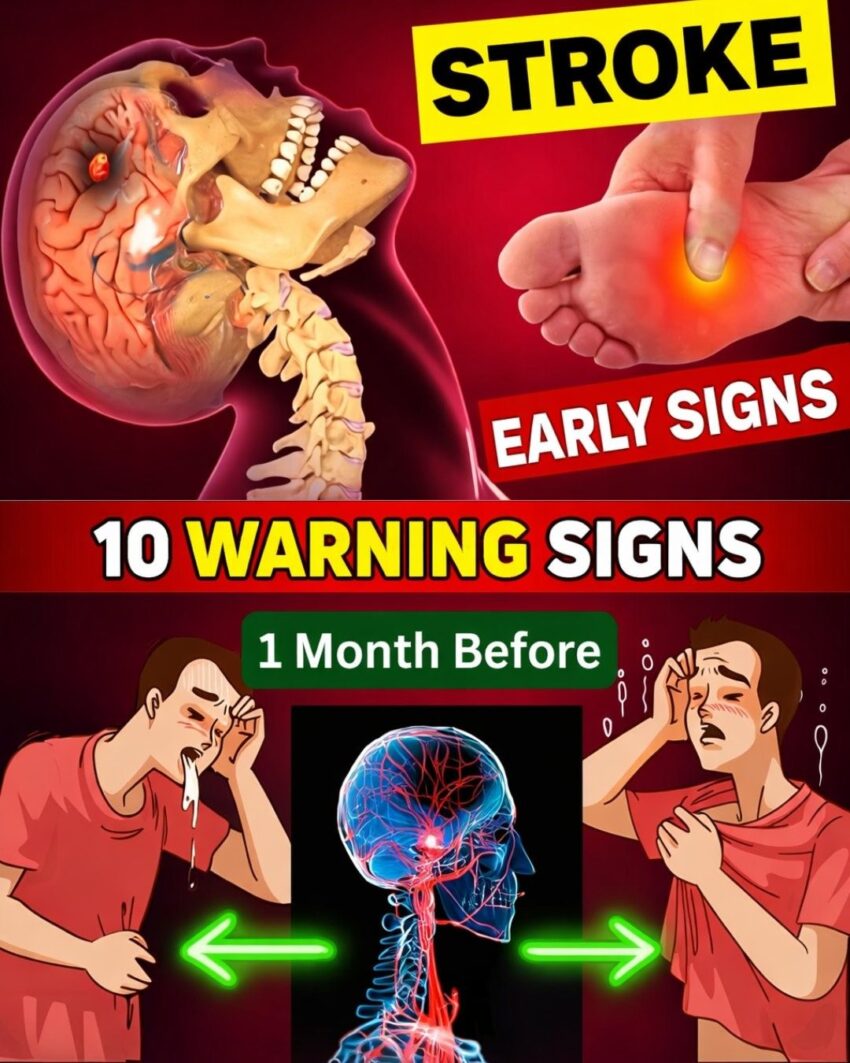
It’s good to be aware of stroke warning signs—but many posts online exaggerate or mix myths with facts. Let’s go through what’s actually supported by medical knowledge in a clear, safe way.
⚠️ First: The Most Important Stroke Signs (Happen Suddenly)
Doctors use the FAST rule:
- F – Face drooping (one side looks uneven)
- A – Arm weakness (can’t raise one arm)
- S – Speech difficulty (slurred or strange speech)
- T – Time to act (call emergency help immediately)
👉 These are emergency symptoms, not something to wait on.
⚠️ “1 Month Before” Signs — Be Careful
There’s no guaranteed list of signs a month before a stroke, but some people may experience mini-strokes, called
Transient Ischemic Attack:
Possible warning episodes:
- Temporary weakness or numbness (face/arm/leg)
- Brief trouble speaking or understanding
- Sudden vision problems
- Dizziness or loss of balance
- Short episodes of confusion
⏳ These symptoms may last minutes and go away—but they are a serious warning and need medical attention.
🛡️ 9 Proven Ways to Reduce Stroke Risk
- Control blood pressure (most important factor)
- Eat a balanced diet (vegetables, fruits, less salt & fried food)
- Exercise regularly (even walking helps)
- Maintain a healthy weight
- Don’t smoke
- Limit sugary drinks and junk food
- Manage diabetes if present
- Reduce stress and sleep well
- Stay hydrated (water is good—but not a “magic cure”)
💡 Important Truth
- No single drink, herb, or trick can prevent a stroke.
- Real prevention = consistent healthy habits + medical care when needed.
🚨 When to Act Immediately
If you or someone else shows FAST symptoms, don’t wait—get emergency help right away. Acting fast can save brain function and life.
If you want, I can make a simple visual checklist you can remember easily or explain stroke in a way that’s super easy to understand.
