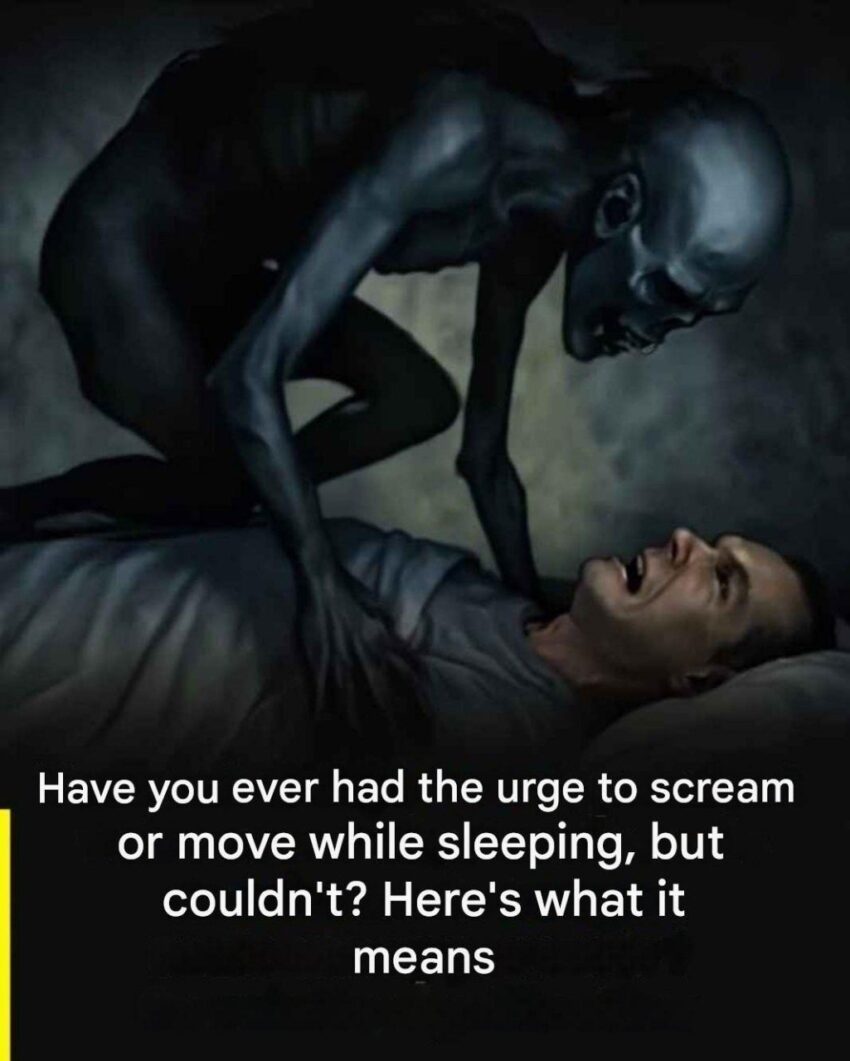
That phrase—“the enigma of nocturnal immobility: when the body refuses to obey”—is describing something very real, but it’s often presented in a dramatic way online.
What it usually refers to is sleep paralysis.
😴 What sleep paralysis is
Sleep paralysis is a temporary state where:
- You are aware or half-awake
- But you cannot move or speak
- It often happens while falling asleep or waking up
🧠 Why it happens
During normal sleep, your brain goes through REM sleep (dream stage), where:
- Your muscles are naturally “switched off” (temporary paralysis)
- This prevents you from physically acting out dreams
Sleep paralysis occurs when:
👉 Your brain wakes up before your body turns this muscle control back on
So you feel awake—but still “stuck” in REM muscle shutdown.
👁️ Common experiences
People often report:
- Inability to move or talk
- Feeling pressure on the chest
- A sense of fear or panic
- Vivid dream-like hallucinations (seeing or sensing things in the room)
These experiences can feel very real, but they are brain-generated during REM sleep transitions.
⚠️ What it is NOT
Sleep paralysis is:
- ❌ Not a spirit or supernatural event
- ❌ Not physical paralysis or nerve damage
- ❌ Not usually dangerous
It is a temporary sleep state mismatch.
🧭 What increases the chance of it
It’s more likely when:
- You’re sleep-deprived
- You have irregular sleep schedules
- You’re stressed or anxious
- You sleep on your back
🛠️ How to reduce episodes
- Keep a regular sleep schedule
- Get enough sleep
- Reduce stress before bed
- Avoid sleeping flat on your back (if it triggers episodes)
🧠 Bottom line
“The body refusing to obey” sounds mysterious, but it’s actually a known sleep phenomenon called Sleep paralysis, caused by a timing mismatch between brain wakefulness and REM muscle relaxation.
If you want, I can also explain:
- why people “see shadows” during it
- or how to break out of an episode quickly
- or how it differs from other sleep disorders
