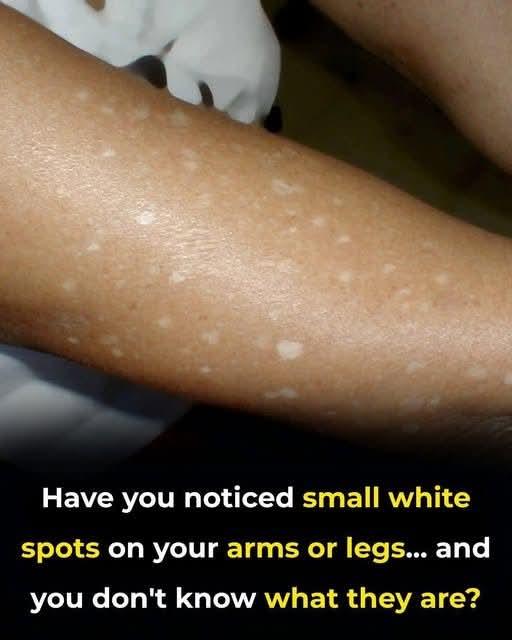
Small white spots on the arms and legs are fairly common, and most causes are harmless—but they can look similar, so it helps to understand the possibilities.
Here are the main causes doctors usually consider:
1. Sun-related white spots (very common)
Small, flat white dots that appear on sun-exposed areas like forearms and shins, especially in adults.
This is often called idiopathic guttate hypomelanosis. It’s basically “sun wear” on skin pigment over time.
Typical features:
- 2–5 mm white spots
- Smooth, not itchy or painful
- More noticeable with aging or frequent sun exposure
What helps:
- Sunscreen daily
- Moisturizers
- Cosmetic treatment if desired (dermatologist options like mild lasers or creams)
2. Fungal infection
A mild yeast infection of the skin can cause light patches, especially in hot, humid climates.
This is commonly called Tinea versicolor.
Typical features:
- Light or slightly scaly patches
- Can be itchy or more noticeable after sweating
- Often affects upper arms, chest, or back (sometimes spreads)
What helps:
- Antifungal creams or shampoos
- Keeping skin dry
- Wearing breathable clothing
3. Loss of skin pigment (vitiligo)
A condition where skin loses pigment in patches due to immune system activity.
Known as Vitiligo.
Typical features:
- Sharply defined white patches
- Can slowly enlarge over time
- Usually not itchy or painful
- Often appears symmetrically on body
What helps:
- Dermatologist evaluation
- Prescription creams or light therapy in some cases
- Sun protection (affected areas burn easily)
4. Dry skin or mild eczema
Sometimes very dry or irritated skin heals leaving lighter patches behind.
Typical features:
- Slight scaling or rough texture
- Mild itchiness at times
- More noticeable in winter or after harsh soaps
What helps:
- Regular moisturizing (especially after bathing)
- Gentle, fragrance-free soaps
- Avoiding very hot showers
5. Post-injury or inflammation marks
After a rash, scratch, or minor injury heals, the skin may temporarily lose pigment.
Typical features:
- Appears after skin irritation
- Gradually fades over months
- No pain or spreading
What helps:
- Time (most fade naturally)
- Sun protection to prevent contrast becoming more visible
When to get it checked
It’s a good idea to see a dermatologist if:
- Spots are spreading quickly
- Borders are very sharp and increasing in size
- There is itching, scaling, or discomfort
- You’re unsure of the cause
Bottom line
Most small white spots on arms and legs are related to sun exposure, mild fungal changes, or harmless pigment variation—but a few conditions like vitiligo or fungal infections may need treatment.
If you want, you can describe what the spots look like (size, texture, whether they itch, how long they’ve been there), and I can help narrow it down more.
