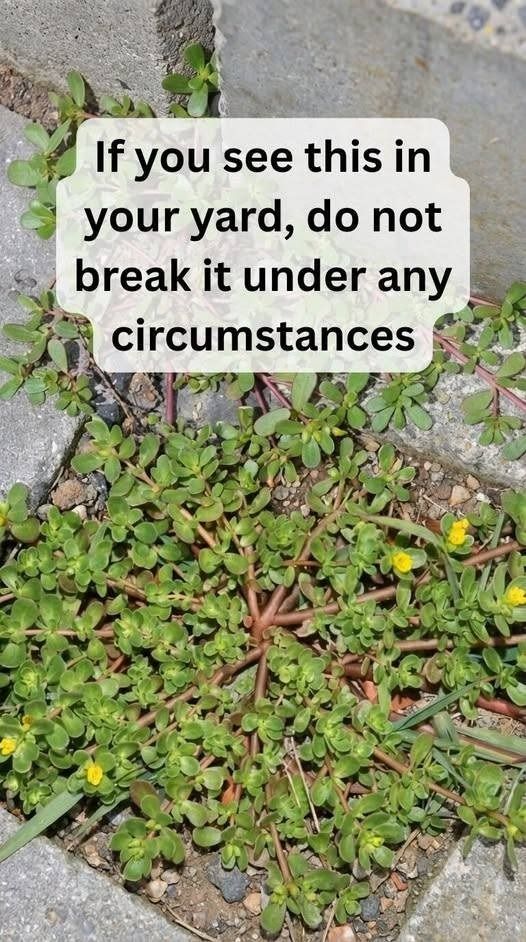
That headline is partly true, partly exaggerated marketing.
It’s talking about Purslane, which is a real edible plant—and yes, it has some nutritional value—but it’s not a miracle “superfood.”
🌿 What purslane actually is
Purslane is a common garden “weed” that is:
- edible (leaves and stems)
- slightly tangy and crunchy
- used in salads and cooking in many cultures
🥗 Why people call it a “superfood” (some real benefits)
It does contain:
- Omega-3 fatty acids (ALA) → rare for a leafy plant
- Vitamin C
- Vitamin A
- Magnesium & potassium
- Antioxidants
So yes—it’s nutrient-dense for a wild plant.
⚠️ But here’s the reality check
- It is not unique—you can get similar nutrients from spinach, kale, nuts, etc.
- It does not cure diseases (despite viral claims)
- It grows like a weed, so nutrient levels can vary depending on soil
- People sometimes overhype it because it’s “free food”
🧠 Safety note
Generally safe to eat, but:
- Avoid if sprayed with pesticides
- People with kidney stone issues should be cautious (it contains oxalates)
🧭 Bottom line
Purslane is a healthy edible plant, not a miracle superfood. The headline is just framing something simple in a dramatic way to get attention.
If you want, I can give you a list of other common “weeds” that are actually edible and safe—some are surprisingly useful.
