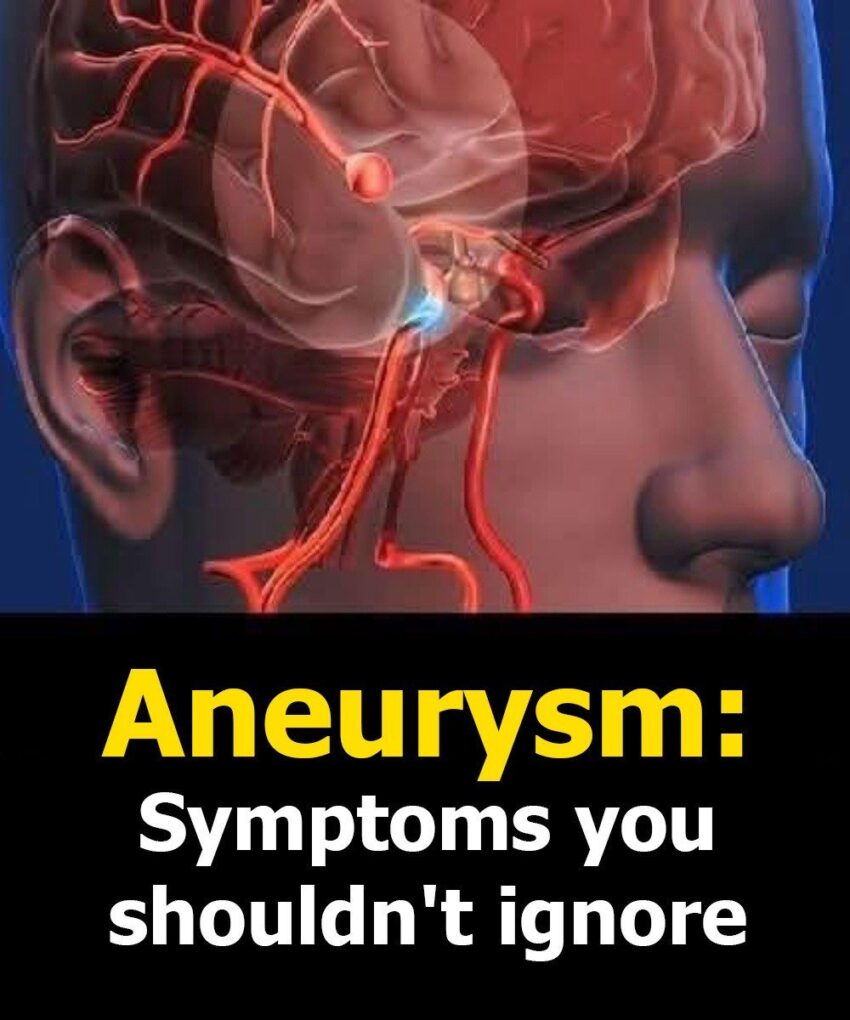
This is another headline that’s usually written in a dramatic, clickbait way. An aneurysm is serious, but it doesn’t usually show “hidden everyday signs” the way these posts suggest. Most aneurysms are actually silent until they become dangerous.
Here’s the real, medically accurate breakdown:
🧠 Brain aneurysm — warning signs (before rupture, uncommon)
Most don’t cause symptoms, but sometimes:
- Sudden or unusual headaches
- Pain above or behind one eye
- Blurred or double vision
- Drooping eyelid
- Unequal pupils
- Numbness or weakness in the face
👉 These happen only if the aneurysm is pressing on nearby nerves.
🚨 Brain aneurysm rupture (medical emergency)
This is the critical situation:
- Sudden, extremely severe headache (“worst headache of life”)
- Neck stiffness
- Nausea/vomiting
- Sensitivity to light
- Fainting or collapse
- Seizures
❤️ Aortic aneurysm (chest/abdomen)
Often silent until large:
Possible warning signs:
- Deep, constant chest or back pain
- Pulsating feeling in abdomen (sometimes)
- Shortness of breath or pressure symptoms
🚨 If it ruptures:
- Sudden severe chest/back/abdominal pain
- Dizziness or collapse
- Low blood pressure, shock symptoms
⚠️ Important truth these posts don’t say
- Most aneurysms have no obvious early symptoms
- There is no “list of signs you can reliably spot at home”
- Risk is more important than symptoms:
- high blood pressure
- smoking
- family history
- certain genetic conditions
🧠 Bottom line
Aneurysms are usually silent. The only truly reliable “sign not to ignore” is:
sudden, severe, unusual pain or collapse → emergency care immediately
If you want, I can also explain how aneurysms are actually found before they rupture (scans, screening, risk checks) in a simple way.
