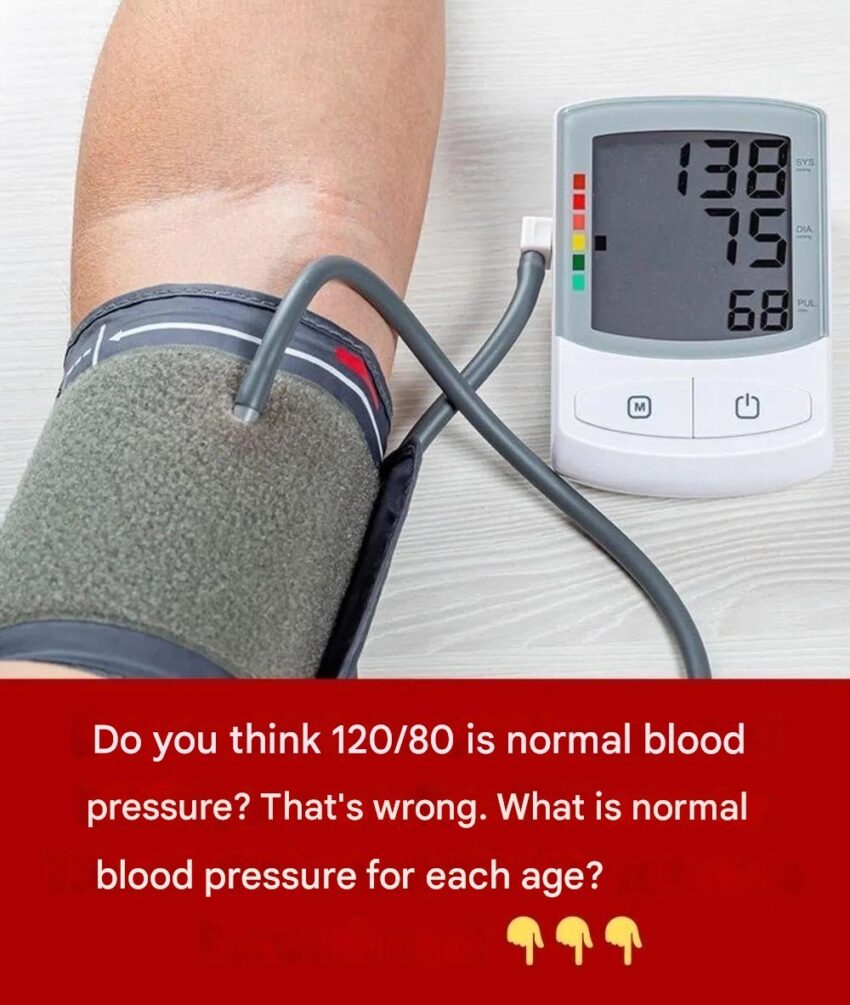
“Normal blood pressure” doesn’t change dramatically by age in a strict way for adults—what changes more is the risk of high blood pressure increasing with age. For children and teens, age/height matters more.
Here’s a simple, practical breakdown:
🧒 Children (1–12 years)
Blood pressure is based on age, height, and sex, but typical ranges are:
- Normal: about 90–110 / 55–75 mmHg
- Lower than adults is normal for kids
🧑 Teenagers (13–17 years)
By this stage, values start to look like adults:
- Normal: about 110–120 / 65–80 mmHg
🧑 Adults (18–59 years)
- Normal: <120 / <80 mmHg
- Elevated: 120–129 / <80
- High blood pressure (Stage 1): 130–139 / 80–89
- High blood pressure (Stage 2): ≥140 / ≥90
👴 Older adults (60+ years)
- Still generally:
- Normal target: <130–140 / <80–90 mmHg (depending on health conditions)
- Slightly higher readings can be seen, but consistently high values are not considered “normal”
⚠️ Important notes
- One reading isn’t enough—blood pressure should be checked multiple times.
- Stress, caffeine, pain, and activity can temporarily raise it.
- “Normal” can vary slightly depending on guidelines and personal health.
🩺 Simple takeaway
Across most ages after childhood:
- Ideal: around 120/80 or lower
- Consistently above that = worth checking with a doctor
If you want, I can also explain:
- what causes high or low blood pressure
- or how to naturally keep it in a healthy range
