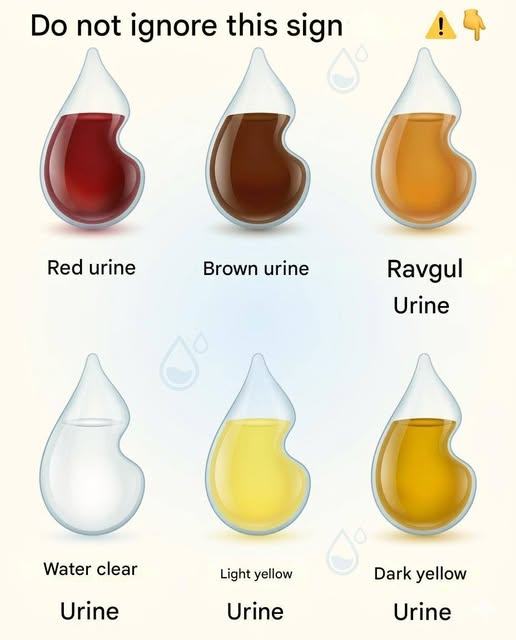
The color of your urine can give useful clues about your hydration and sometimes your health, but it’s not a diagnosis by itself. Most changes are harmless and related to fluids, food, or vitamins.
Here’s a simple guide:
💧 Clear or very light yellow
- Usually well hydrated
- Sometimes too much water intake
- Generally normal
🌼 Pale yellow (ideal)
- Best “healthy” range
- Good hydration balance
👉 This is what most people should aim for.
🍯 Dark yellow / amber
- Mild dehydration (most common cause)
- You may need more fluids
🟠 Orange
Possible causes:
- Dehydration
- Certain medications or supplements
- Sometimes liver or bile issues (if persistent)
👉 If it doesn’t go away, it’s worth checking.
🩷 Pink or red
Possible causes:
- Foods like beets or berries
- Menstruation contamination
- Or blood in urine (needs medical attention if unexplained)
🟤 Brown / cola-colored
Possible causes:
- Severe dehydration
- Liver or kidney issues
- Muscle breakdown (rare but serious)
👉 This should be evaluated promptly if not food-related.
🟢 Blue or green (rare)
Possible causes:
- Certain medications or dyes
- Rare infections or genetic conditions
Usually not dangerous but should be discussed if unexplained.
⚠️ When to see a doctor
Seek advice if you notice:
- Blood without clear reason
- Persistent dark brown or orange urine
- Pain, burning, or fever
- Sudden major changes in color that don’t improve
🧠 Bottom line
Urine color is mainly a hydration tracker, not a full health test.
- Light yellow = good
- Dark = drink more water
- Red/brown (unexplained) = check with a doctor
If you want, I can show you a simple “hydration chart” or daily water guide based on your age and activity level.
