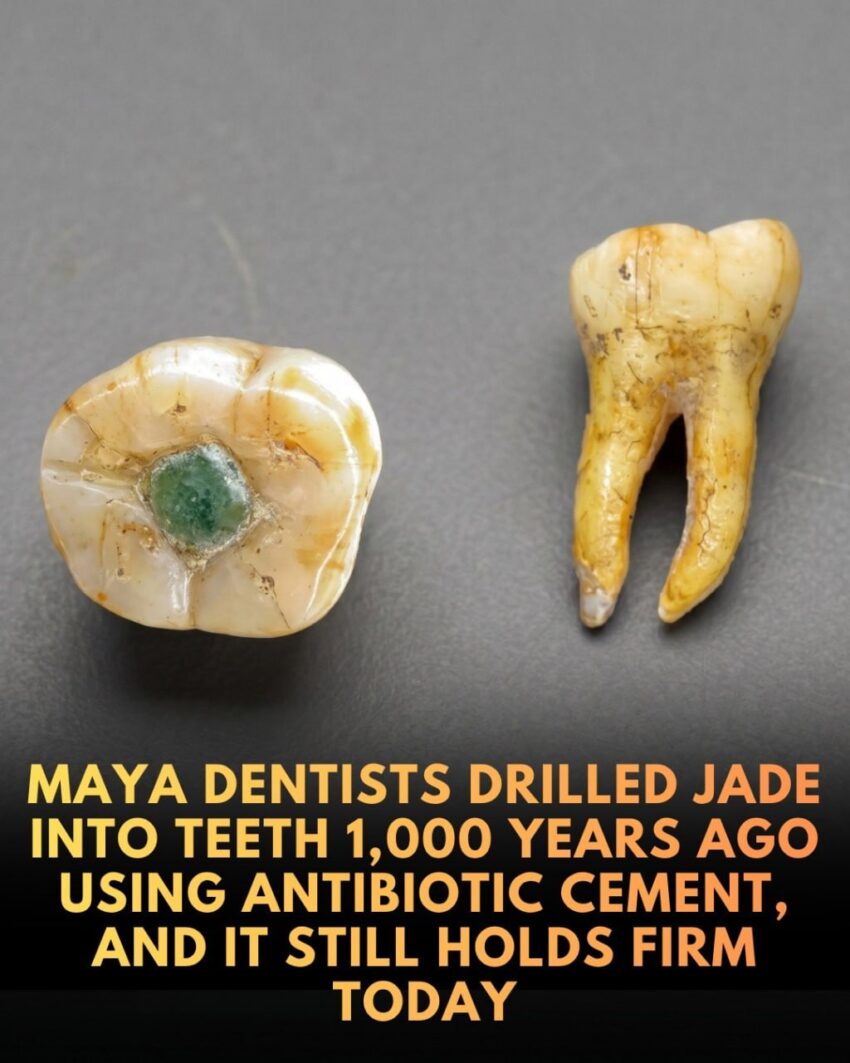
Ancient Maya dentistry is often surprising to modern readers because it wasn’t just cosmetic—it sometimes had real effects on tooth health, even though it was developed without modern medical science.
The Maya civilization in Mesoamerica developed some of the most advanced pre-Columbian dental practices known to archaeology. They are especially famous for decorative dental modifications: shaping teeth and embedding small inlays of jade, turquoise, pyrite, or obsidian into drilled holes in the front teeth. At first glance, this looks purely aesthetic, but it reveals a much more complex understanding of the mouth than people once assumed.
Not just decoration
For a long time, researchers thought Maya dental work was only symbolic or cultural. However, studies of skeletal remains suggest a more practical side. The drilling techniques used to place inlays sometimes removed decayed portions of teeth. In some cases, the inserted materials may have acted as a seal, slowing further damage.
While it’s important not to overstate this—Maya dentistry was not “curing cavities” in the modern sense—it did occasionally overlap with functional repair. The smooth polishing of drilled areas and the fit of inlays could reduce food trapping in damaged teeth, which may have helped limit further decay.
Materials with possible protective effects
Some materials used by the Maya may also have had incidental benefits:
- Jade and turquoise were inert and didn’t rot or decompose in the mouth.
- Natural resins and plant-based adhesives used to secure inlays may have had mild antimicrobial properties, though this is still debated.
- Smoothing and reshaping enamel after drilling could reduce sharp edges where bacteria accumulate.
Still, there is no evidence they understood bacteria or infection in the modern sense. Their techniques were likely driven by cultural, ritual, and status-related motivations first, with incidental health effects.
Pain and risk
Dental procedures were performed without anesthesia or sterilization. Drilling into enamel with stone tools was extremely painful and carried a risk of infection. Many skulls show signs of tooth damage and wear, meaning not all procedures were successful or beneficial.
A blend of art, identity, and early medicine
Dental modification in the Maya world was often tied to identity, beauty, and social status. Teeth were modified during adolescence or adulthood as part of cultural expression. However, the fact that some procedures incidentally helped preserve teeth suggests an early form of practical dental intervention emerging alongside cultural practice.
Conclusion
Ancient Maya dentistry wasn’t “dentistry” in the modern clinical sense, but it was far more sophisticated than simple decoration. While its primary purpose was cultural, certain techniques—like drilling, smoothing, and inlay placement—may have unintentionally helped protect teeth from further decay in some cases.
In short, it represents a fascinating overlap between art, ritual, and early experimentation with oral health within the Maya civilization.
