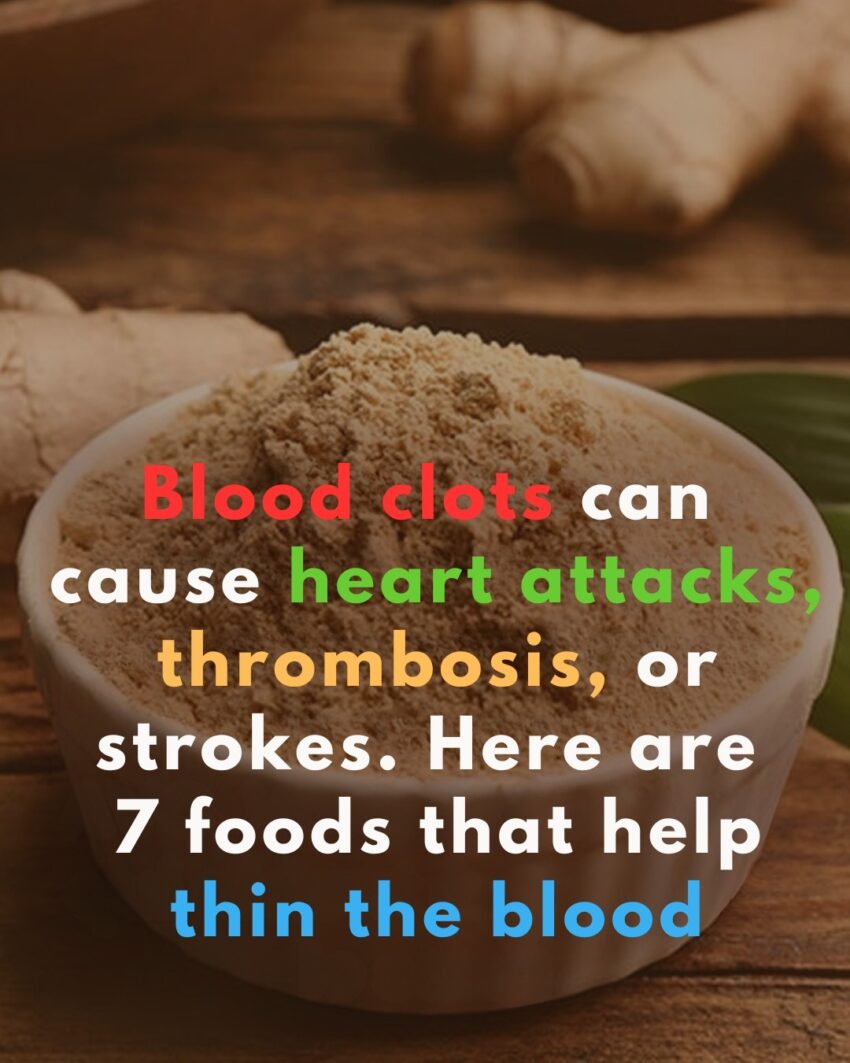
That headline is another clickbait-style simplification. Some foods can have a mild effect on blood clotting, but there is no set of “7 powerful blood-thinning foods” that works like medication.
When doctors talk about “blood thinners,” they usually mean prescribed medicines—not diet alone. One common example is:
Warfarin (a prescription anticoagulant used to prevent dangerous clots)
✔ Foods often loosely described as “blood-thinning”
These may slightly affect clotting or circulation, but effects are mild and not comparable to medication:
1. Garlic
May have a small effect on platelet activity.
2. Ginger
Can mildly influence clotting and inflammation.
3. Turmeric
Contains curcumin, studied for mild anti-clotting effects.
4. Fatty fish (omega-3s)
Like salmon and sardines—may support heart health and circulation.
5. Green tea
Contains compounds that may slightly affect platelets.
6. Berries
Rich in antioxidants that support vascular health.
7. Leafy greens
Support overall cardiovascular health (but important note below).
⚠ Very important medical context
- These foods do NOT replace blood-thinning medication
- Their effect is usually small and not predictable
- If someone is on prescription blood thinners (like warfarin), diet changes can actually interfere with treatment
Example: leafy greens contain vitamin K, which can affect how some medications work.
🧠 Bottom line
These are healthy foods, but calling them “powerful blood thinners” is misleading. Real blood thinning for medical conditions requires proper diagnosis and medication supervision, not diet lists from social media.
If you want, I can explain which foods actually matter most for heart and stroke prevention in a realistic, doctor-approved way (no hype lists).
