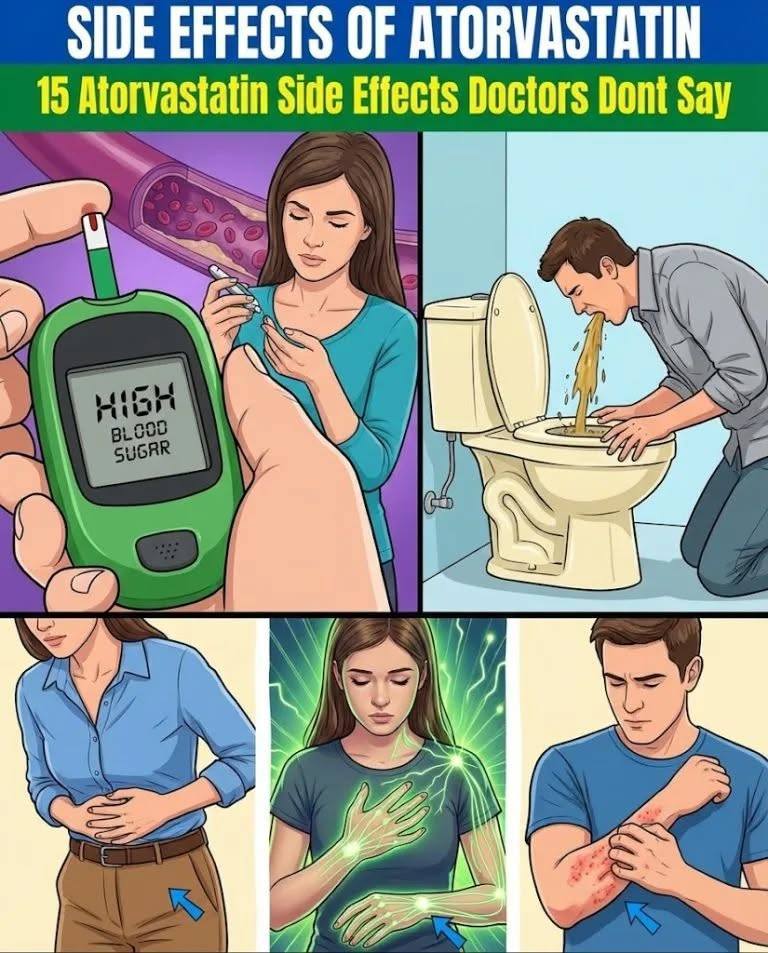
That headline is another fear-based clickbait article format, but it’s referring to a real medication:
Atorvastatin (a statin used to lower cholesterol and reduce risk of heart attack and stroke)
Let’s separate real side effects from exaggerated “hidden alarm” claims.
✔ Common, real side effects (well-known)
These are already listed in medical guidelines and doctors do discuss them:
- Muscle aches or weakness (most common complaint)
- Mild digestive issues (nausea, constipation, diarrhea)
- Headache
- Slight increase in liver enzymes (usually monitored by blood tests)
⚠ Less common but important (what articles often dramatize)
- Significant muscle injury (very rare condition called rhabdomyolysis)
- Liver inflammation (rare, usually detected early in labs)
- Increased blood sugar levels in some people (small risk)
❗ What “15 hidden side effects” articles usually do
They often:
- Mix rare, mild, and unproven effects together
- Present normal sensations (fatigue, headaches) as dangerous
- Suggest doctors are “hiding” information (they aren’t—this is standard prescribing info)
🧠 Important context doctors emphasize
For most people at risk of heart disease:
- Benefits of atorvastatin (preventing heart attack/stroke) far outweigh risks
- Side effects are monitored and manageable in most cases
- You should not stop it suddenly without medical advice
✔ When to contact a doctor
- Persistent muscle pain or weakness
- Dark-colored urine (rare warning sign)
- Severe fatigue that doesn’t improve
- Yellowing of skin/eyes (possible liver issue)
Bottom line
Atorvastatin is a well-studied, widely prescribed medication, and while side effects exist, “hidden dangers” lists online are usually exaggerated for clicks.
If you want, I can break down whether statins are actually “safe long-term” in simple terms based on real clinical research.
