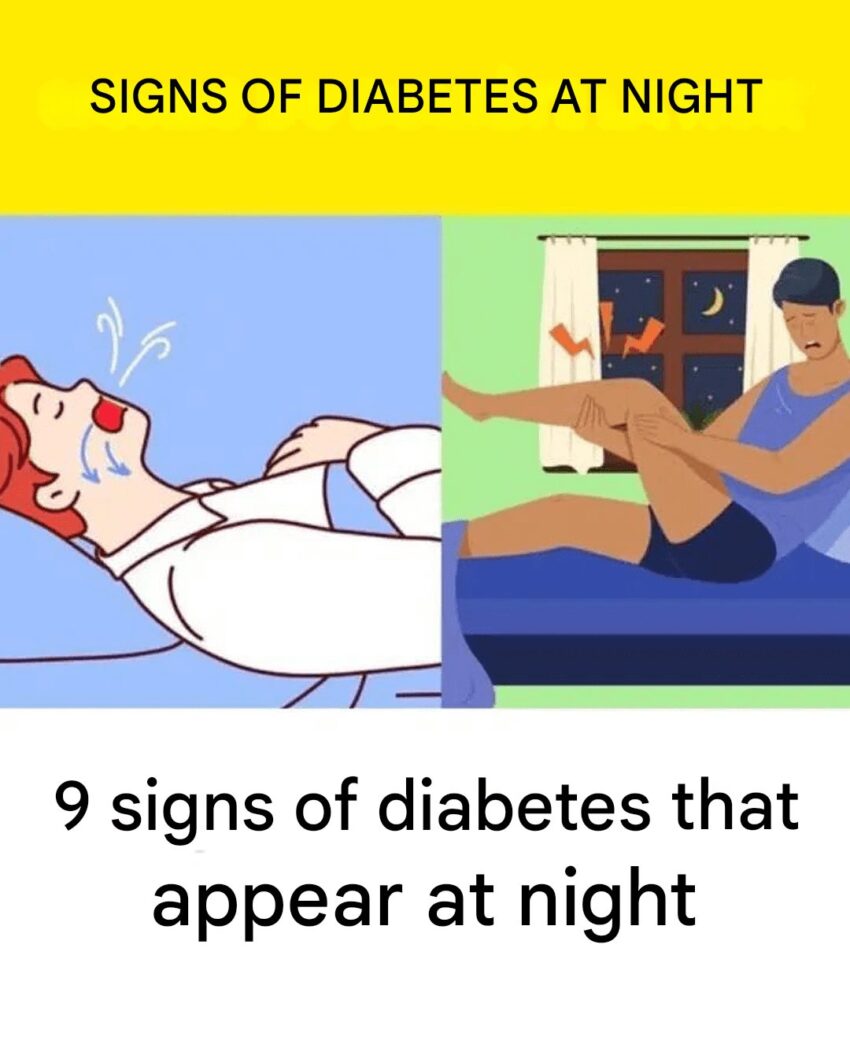
That headline is another clickbait “symptom list” format. It usually takes real diabetes symptoms and exaggerates them into a scary “9 signs at night” warning.
Here’s the accurate, medically grounded version:
Type 2 Diabetes (and other forms of diabetes) can cause symptoms when blood sugar is too high or too low. Some people may notice them more at night simply because they’re resting and more aware of their body.
Possible symptoms that can happen (including at night)
Not everyone gets all of these, and they don’t automatically mean diabetes:
- Needing to urinate more often (including waking up at night)
- Feeling very thirsty
- Waking up feeling sweaty, shaky, or hungry (can happen with low blood sugar)
- Trouble sleeping or frequent waking
- Fatigue even after sleeping
- Headaches in the morning
- Blurred vision (can fluctuate with blood sugar changes)
- Restless sleep
Important reality check
- These symptoms are not unique to diabetes
- Stress, poor sleep, caffeine, anxiety, or late eating can cause similar effects
- A real diagnosis requires blood tests, not symptom lists from articles
Why these articles are misleading
They:
- Mix common symptoms with rare ones
- Suggest “night symptoms = diabetes” (not true)
- Try to make normal experiences sound alarming
If someone is genuinely concerned
The correct step is not guessing from lists—it’s getting a simple medical check like:
- Fasting blood glucose test
- HbA1c test
If you want, I can break down what actually increases diabetes risk in a realistic way (without scary internet lists).
