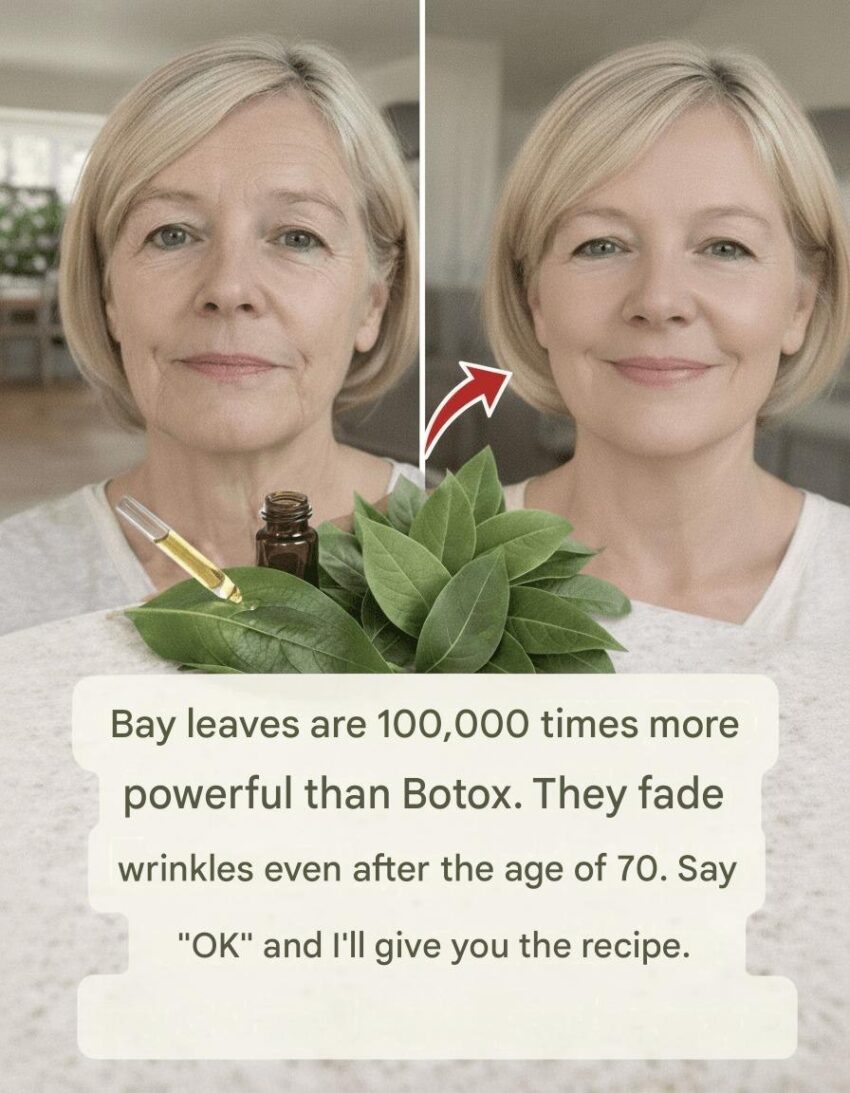
The idea that bay leaf is a “natural anti-aging agent that removes wrinkles” is mostly a social media claim, not something strongly supported by scientific evidence.
Here’s what’s actually known:
🌿 What bay leaves contain
Bay leaves have compounds like:
- antioxidants (such as polyphenols)
- small amounts of essential oils
- anti-inflammatory compounds (in lab settings)
These are why they’re sometimes used in traditional herbal practices.
🧴 Can it reduce wrinkles?
What evidence says:
- There is no good clinical evidence that bay leaf applied to the skin or used as a tea can reduce wrinkles.
- Wrinkles form mainly due to:
- aging (loss of collagen)
- sun exposure (UV damage)
- genetics and lifestyle factors
Bay leaf does not directly stimulate collagen or reverse skin aging in a proven way.
⚠️ Possible risks of using it on skin
Applying bay leaf preparations directly can:
- irritate sensitive skin
- cause redness or allergic reactions
- be too strong if used as concentrated oil or extract
👍 What actually helps with wrinkles (evidence-based)
If the goal is skin aging support, these are proven:
- 🧴 sunscreen (most important anti-aging step)
- 💧 moisturizers with hyaluronic acid
- 🧪 retinoids (vitamin A derivatives)
- 🥗 balanced diet with vitamins C & E
- 😴 good sleep and hydration
🧠 Bottom line
Bay leaf is:
- ✔️ a flavorful herb with some antioxidant compounds
- ❌ not a proven anti-wrinkle or anti-aging treatment
It may support general wellness, but it won’t replace skincare ingredients that are scientifically shown to work.
If you want, I can break down natural ingredients that do have real evidence for improving skin aging (without hype or risky DIY trends).
