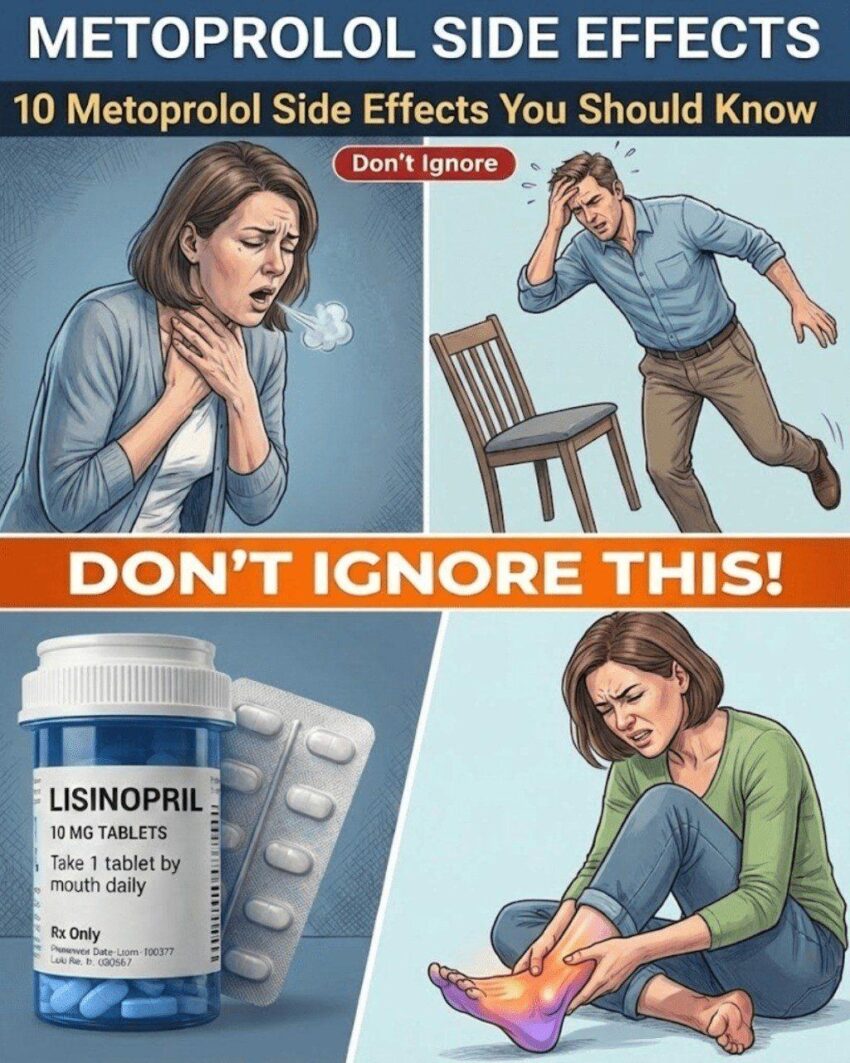
A lot of articles like that are written in a way that makes normal medication effects sound “hidden” or alarming. With Metoprolol, most side effects are actually well-known and well-studied—they’re just sometimes not talked about in everyday conversations unless they become noticeable.
Metoprolol is a beta-blocker, commonly used for high blood pressure, heart rhythm issues, chest pain (angina), and sometimes migraine prevention.
Here are real side effects people may not always expect or connect to the medication:
Common but sometimes “overlooked”
- Fatigue or low energy (slower heart rate)
- Dizziness, especially when standing up quickly
- Cold hands and feet (reduced circulation)
- Mild shortness of breath in some people
Mood and brain-related effects (not everyone gets these)
- Vivid dreams or sleep disturbances
- Low mood or feeling “slower” mentally
- Difficulty concentrating (usually mild)
Heart and blood pressure effects
- Slower than normal heart rate
- Lightheadedness if blood pressure drops too much
Less common but important
- Sexual side effects (reduced libido in some people)
- Masking signs of low blood sugar in diabetics (like fast heartbeat)
- Worsening asthma or breathing issues in sensitive individuals (especially higher doses or certain forms)
Rare but serious (needs medical attention)
- Very slow heart rate with fainting or severe dizziness
- Severe shortness of breath
- Swelling in legs or sudden weight gain (possible fluid retention issues)
Important context
- Many people take metoprolol for years with minimal issues
- Side effects are often dose-dependent and adjustable
- Doctors frequently switch timing, dose, or formulation if side effects are bothersome
If you want, tell me what you’ve been reading or experiencing—I can help you separate what’s normal, what’s manageable, and what actually needs a doctor’s attention.
