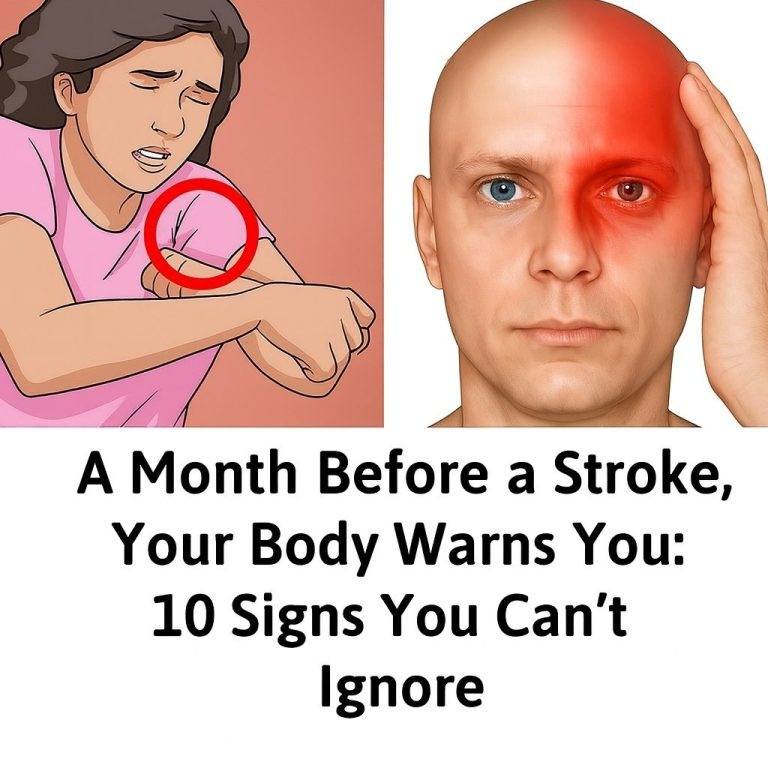
That kind of headline is very clickbait-y. While it’s true that some people experience warning signs before a stroke, there is no reliable “10-sign checklist” that guarantees a stroke a month in advance. Stroke symptoms can appear suddenly (minutes to hours), and that’s why it’s treated as a medical emergency.
What does matter is recognizing real warning signs of an impending or active stroke (or TIA—“mini-stroke”).
🚨 Stroke warning signs you should NEVER ignore
FAST signs (most important)
- F – Face drooping (one side feels numb or uneven)
- A – Arm weakness (one arm drifts or feels weak)
- S – Speech difficulty (slurred or confused speech)
- T – Time to call emergency help immediately
Other possible warning symptoms (can happen before or during a stroke)
- Sudden numbness or weakness in face, arm, or leg (especially one side)
- Sudden confusion or trouble understanding speech
- Sudden vision problems in one or both eyes
- Sudden dizziness, loss of balance, or coordination problems
- Sudden severe headache with no known cause
- Brief episodes of stroke-like symptoms that disappear quickly (possible TIA)
⚠️ Important reality check
- These symptoms do NOT reliably appear a month in advance
- Many strokes happen without long warning
- A TIA can be a warning sign, but it usually occurs hours or days before, not weeks
🧠 What actually reduces stroke risk
Doctors focus more on prevention than prediction:
- Controlling blood pressure
- Managing diabetes
- Not smoking
- Regular physical activity
- Healthy diet (low salt, balanced fats)
- Treating heart conditions like atrial fibrillation
Bottom line
There is no proven “10 signs a month before stroke” system. The real lifesaving knowledge is:
Stroke symptoms are sudden → act immediately using FAST.
If you want, I can break down the difference between a stroke, mini-stroke (TIA), and migraine, because they’re often confused but very different medically.
