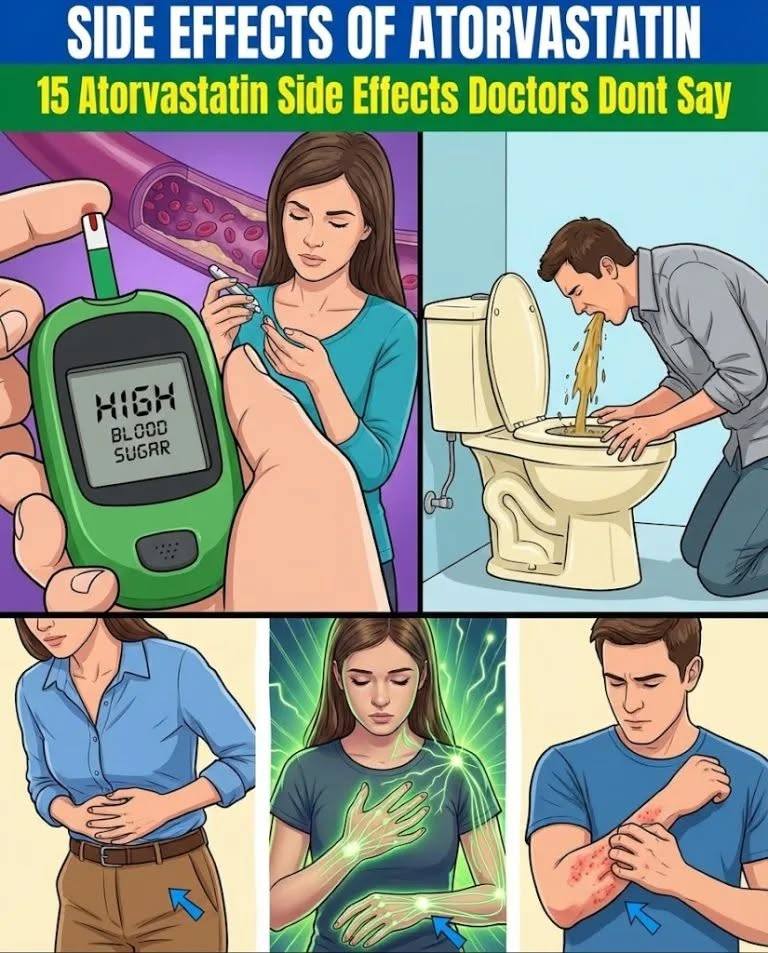
That headline is classic clickbait—it mixes real side effects with exaggeration to make it sound like something is being “hidden.” Let’s separate facts from hype about Atorvastatin.
What’s actually true (evidence-based)
Doctors do know and monitor these effects. Most are already listed in official medical sources like Mayo Clinic and drug databases.
Common side effects (usually mild)
- Muscle aches or joint pain
- Headache
- Digestive issues (diarrhea, nausea, gas)
- Cold-like symptoms (runny nose, cough) (Drugs.com)
These often improve as your body adjusts.
Less common but real
- Trouble sleeping
- Low energy or weakness
- Mild increases in blood sugar
- Loss of appetite or stomach discomfort (Drugs.com)
Rare but important (doctors care about these)
- Muscle damage (can be serious in rare cases)
- Liver problems (monitored with blood tests)
- Allergic reactions (rash, swelling)
- Memory issues or confusion (rare and usually reversible) (Drugs.com)
What those viral posts get wrong
- They imply doctors are “hiding” side effects → not true. These are documented and monitored.
- They list every possible symptom without context → making it look scarier than it is.
- They ignore how rare serious effects are.
In fact, newer research shows many feared side effects are overestimated:
- Only a small number of symptoms occur more often than placebo
- Serious muscle problems are very rare (about 1 in 10,000 per year) (Reuters)
The bigger picture
Atorvastatin is widely used because it:
- lowers cholesterol
- reduces risk of heart attack and stroke
For most people, benefits outweigh risks—especially if you already have high cholesterol or heart risk.
Bottom line
- Yes, side effects exist—but they’re well-known, not hidden
- Most are mild and temporary
- Serious ones are rare and monitored by doctors
If you want, tell me your dose or symptoms—I can help you figure out what’s normal vs. when you should actually talk to a doctor.
