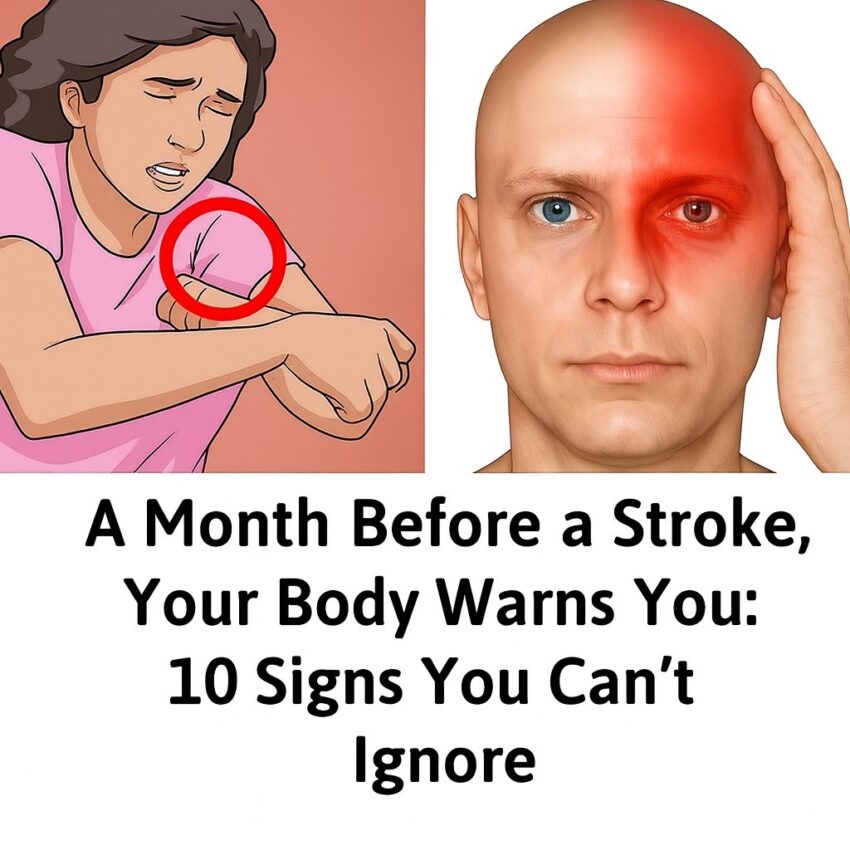
That headline is clickbait-style oversimplification. There is no reliable set of “10 warning signs a month before a stroke” that applies to everyone.
However, doctors do recognize possible warning signs of an impending stroke or mini-stroke (TIA)—and some people may experience them days to weeks before, but not always.
🧠 Real warning signs related to stroke risk
🚨 Sudden neurological symptoms (most important)
These can happen minutes to days before a major stroke, especially in a TIA (mini-stroke):
- Face drooping on one side
- Arm weakness or numbness
- Speech difficulty or slurred speech
- Vision loss or double vision
- Sudden confusion
- Loss of balance or coordination
👉 These are part of the FAST warning signs (Face, Arms, Speech, Time).
⚠️ Possible “early warning” symptoms some people report
These are not specific or guaranteed, but may indicate increased risk:
- Unusual or severe headaches
- Brief episodes of dizziness or vertigo
- Temporary vision changes
- Tingling or numbness that comes and goes
- Sudden fatigue or weakness episodes
- Short episodes of confusion
- High blood pressure spikes (often silent)
🧪 Important medical reality
- Many strokes happen without clear early warning signs
- A stroke risk builds over time due to:
- High blood pressure
- Diabetes
- Smoking
- High cholesterol
- Heart disease
🚨 When to act immediately
Call emergency services if you notice:
- Sudden face droop
- Arm weakness
- Speech difficulty
Even if symptoms disappear (possible TIA)
🧠 Bottom line
There is no guaranteed “10-signs-one-month-before” checklist. Some people experience warning episodes, but many strokes occur suddenly. The most important focus is recognizing FAST symptoms and controlling risk factors early.
If you want, I can explain how to lower stroke risk significantly in everyday life (diet, habits, blood pressure control) in a simple guide.
