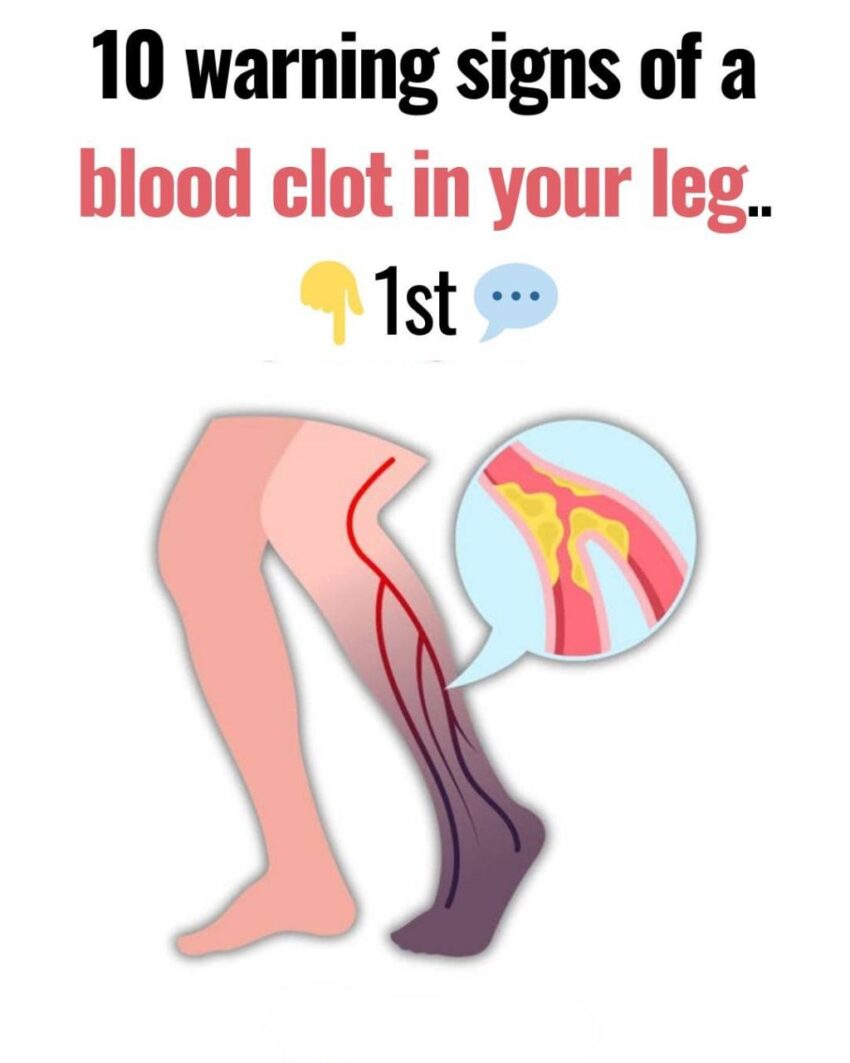
That’s another fear-based clickbait post. Deep vein thrombosis (DVT, a blood clot in a deep vein—usually the leg) is real and serious, but it doesn’t “mysteriously reveal itself in dramatic lists” the way social media posts suggest.
Here’s the accurate medical picture:
Common signs of DVT (what doctors actually look for)
- Swelling in one leg (often sudden or unexplained)
- Pain or tenderness in the calf or thigh (may feel like cramping or soreness)
- Warmth in the affected area
- Red or discolored skin on the leg
- Veins that look more visible than usual
Sometimes there are no obvious symptoms, which is why risk awareness matters.
Important risk factors (“triggers” in real terms)
- Long periods of inactivity (long travel, bed rest)
- Recent surgery or injury
- Smoking
- Pregnancy or recent childbirth
- Certain medical conditions or hormone therapy
- History of previous clots
Why it matters
The danger isn’t just the leg clot itself—it’s that a clot can rarely travel to the lungs and cause a pulmonary embolism, which is a medical emergency.
What to do (important)
If someone has:
- sudden one-leg swelling + pain, or
- symptoms plus chest pain or shortness of breath
they should seek urgent medical care immediately.
Bottom line
DVT is real, but posts like “10 hidden signs + secret trigger in comments” are designed to scare and get engagement—not to provide reliable medical guidance.
If you want, I can break down how to tell DVT apart from a normal muscle cramp or soreness, since people often confuse them.
