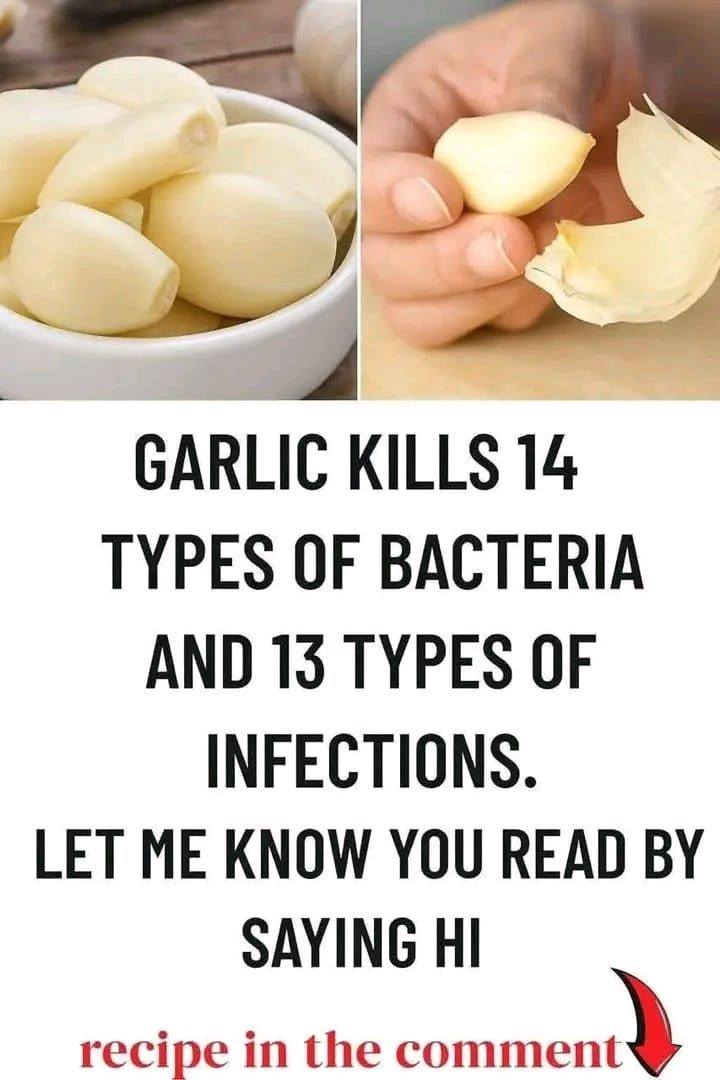
That headline is oversimplified and a bit misleading.
🧄 What garlic actually does
Garlic contains compounds like allicin, which have been shown in lab studies to have:
- Mild antimicrobial (bacteria-fighting) activity
- Some antiviral and antifungal effects in test tubes
- Anti-inflammatory and antioxidant properties
So yes—garlic has health-supporting compounds.
⚠️ What garlic is NOT
- ❌ Not a true “natural antibiotic” like prescription antibiotics
- ❌ Not strong enough to treat or cure infections on its own
- ❌ Not a replacement for medical treatment in bacterial infections
Lab effects ≠ guaranteed effects in the human body, because:
- Allicin breaks down quickly during digestion
- Effective concentrations in the body are much lower than in lab settings
🧠 What science actually supports
Garlic may:
- Slightly support immune function
- Possibly reduce frequency of mild colds in some studies
- Help cardiovascular health (blood pressure, cholesterol) in some cases
But it does not “fight infections like a medicine” in a reliable clinical way.
🧄 Safe ways to use garlic
- In food (soups, stir-fries, sauces)
- Lightly crushed and eaten (more allicin than cooked, but still limited effect)
🚨 Important note
If someone has:
- Fever
- Bacterial infection (like strep throat, UTI, etc.)
- Worsening symptoms
They should not rely on garlic instead of proper medical care.
Bottom line
Garlic is a healthy food with some medicinal potential, but calling it a “natural antibiotic that wages war on infections” is marketing language, not medical fact.
If you want, I can list foods that actually have evidence-backed immune benefits or explain what antibiotics really do differently from natural compounds.
