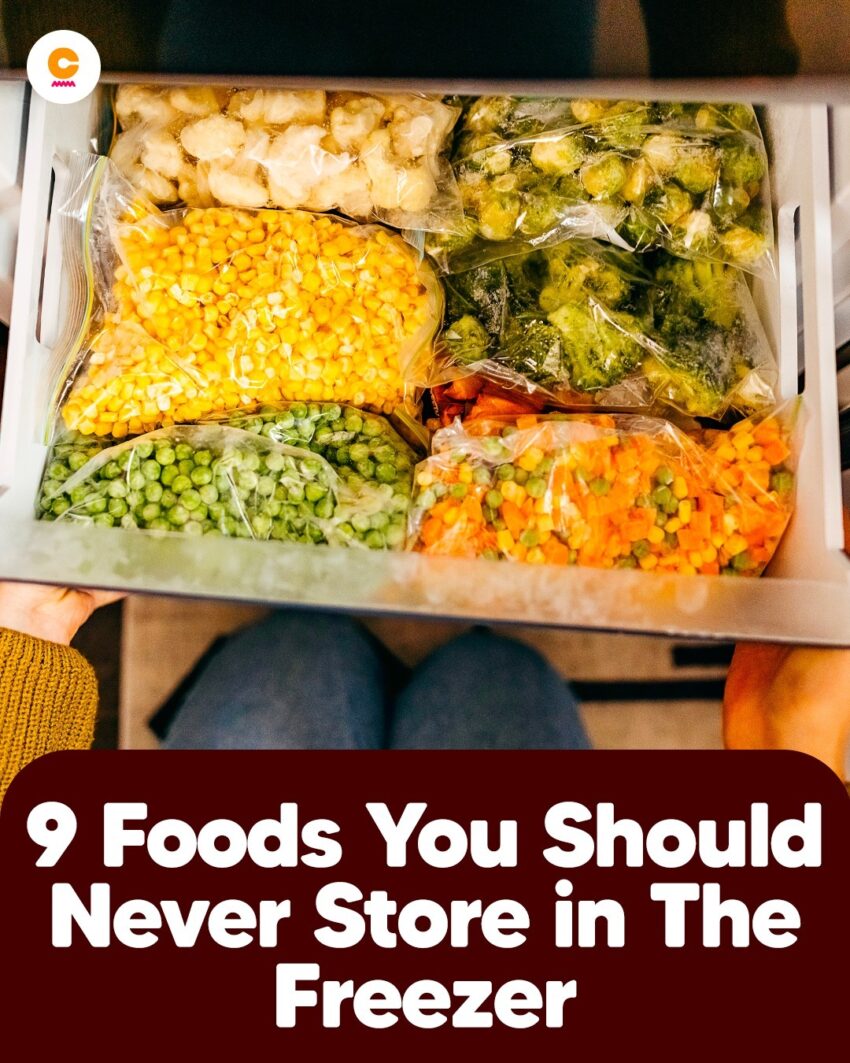
That “never store these foods in the freezer” type list is usually overstated. Most foods are safe to freeze—but quality (texture, taste, separation) is what often suffers.
Here are 9 foods that don’t freeze well (or only freeze well in specific forms):
1. 🥛 Milk and cream
- Can separate and become grainy after thawing
- Still safe to use, but texture changes
Tip: Shake well or use in cooking after thawing
2. 🥚 Eggs in shell
- They can crack and expand
- Raw eggs are better frozen beaten and stored in a container
3. 🥗 Lettuce and watery salads
- Become limp and soggy
- High water content destroys structure
4. 🥒 Cucumbers
- Turn mushy and watery
- Not suitable for freezing raw use
5. 🥔 Raw potatoes
- Texture becomes grainy and sweet
- Better if cooked first (mashed or parboiled)
6. 🍎 High-water fruits (watermelon, grapes, oranges)
- Lose texture and become mushy
- Grapes are okay if used frozen as snacks or in drinks
7. 🧀 Soft cheeses
- Cream cheese, ricotta, etc. can become crumbly or watery
- Hard cheeses freeze better than soft ones
8. 🥤 Yogurt
- Often separates after thawing
- Still usable in smoothies or cooking
9. 🍝 Cooked pasta and rice (plain)
- Can become dry or mushy when reheated
- Better if frozen with sauce or moisture added
🧠 Key truth behind these lists
Nothing here is “dangerous” to freeze. The real issue is:
- Water expands → breaks cell structure
- Thawing causes separation or sogginess
🟢 Bottom line
You can freeze most foods safely. The question isn’t “should you freeze it,” but:
“Will I still like the texture after thawing?”
If you want, I can also give you a list of foods that actually freeze extremely well and save money long-term.
