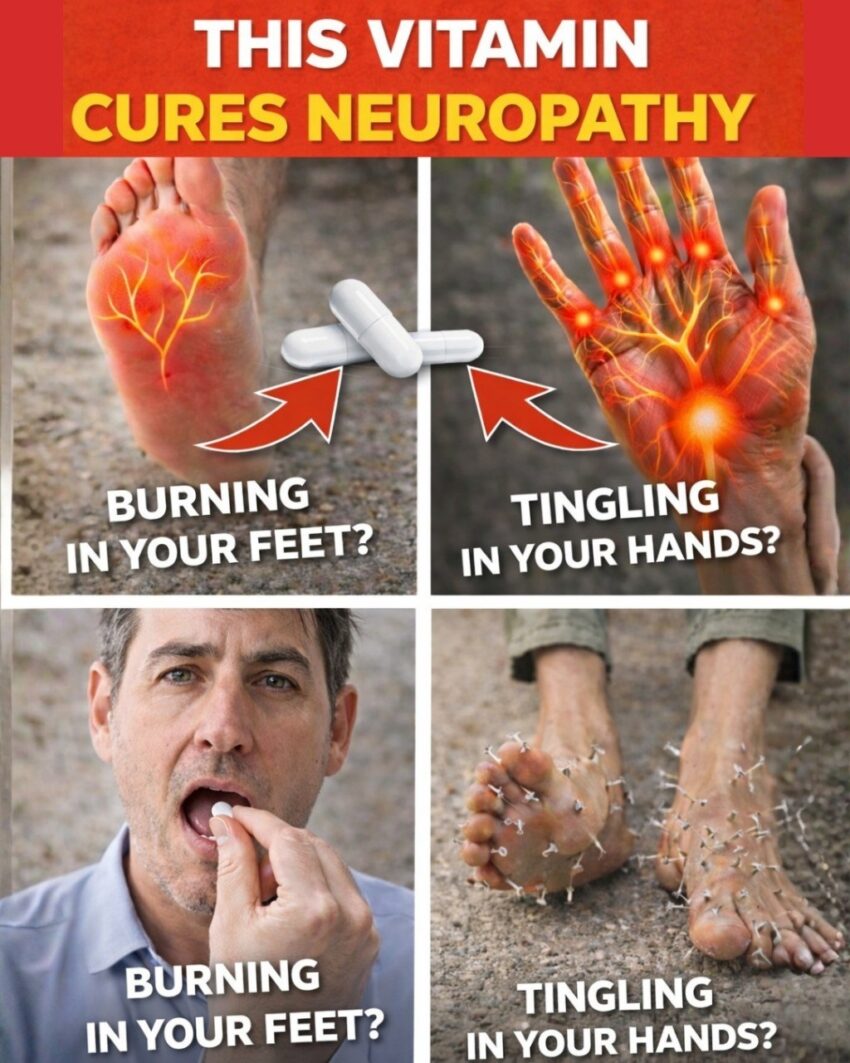
There isn’t a single “#1 vitamin” that reliably heals all neuropathy—but one nutrient stands out as most important when it’s actually deficient:
Vitamin B12
Vitamin B12 plays a key role in maintaining the protective covering of nerves (myelin). When levels are low, people can develop symptoms like tingling, numbness, or burning in the hands and feet—often linked to Peripheral neuropathy.
Why B12 matters
- Supports nerve repair and function
- Helps prevent nerve degeneration
- Deficiency can directly cause neuropathy
What to do
- Ask for a B12 blood test if you have symptoms
- If low, treatment may include oral supplements or injections
- Improvement can take weeks to months, depending on severity
Important reality check
Neuropathy has many causes. Even the best vitamin won’t fix it if the root issue isn’t addressed. Common causes include:
- Type 2 Diabetes (most common)
- Certain medications (including statins in rare cases)
- Alcohol use
- Thyroid problems
- Other vitamin deficiencies
Other nutrients that can help (when appropriate)
- Vitamin B1 (Thiamine) – especially in diabetic neuropathy
- Vitamin B6 – helpful in small doses (too much can actually cause nerve damage)
- Alpha-lipoic acid – an antioxidant sometimes used for nerve pain
What you can do today
- Don’t guess—test before supplementing, especially for B12
- Keep blood sugar controlled if diabetes is involved
- Review medications with your doctor
- Avoid megadoses without guidance (more ≠ better)
Bottom line
If you’re looking for the closest thing to a “#1 vitamin,” it’s B12—but only if you’re deficient. Otherwise, treating the underlying cause matters far more than any supplement.
If you want, tell me your symptoms (when they started, any conditions you have), and I can help you narrow down the most likely cause and what to check next.
