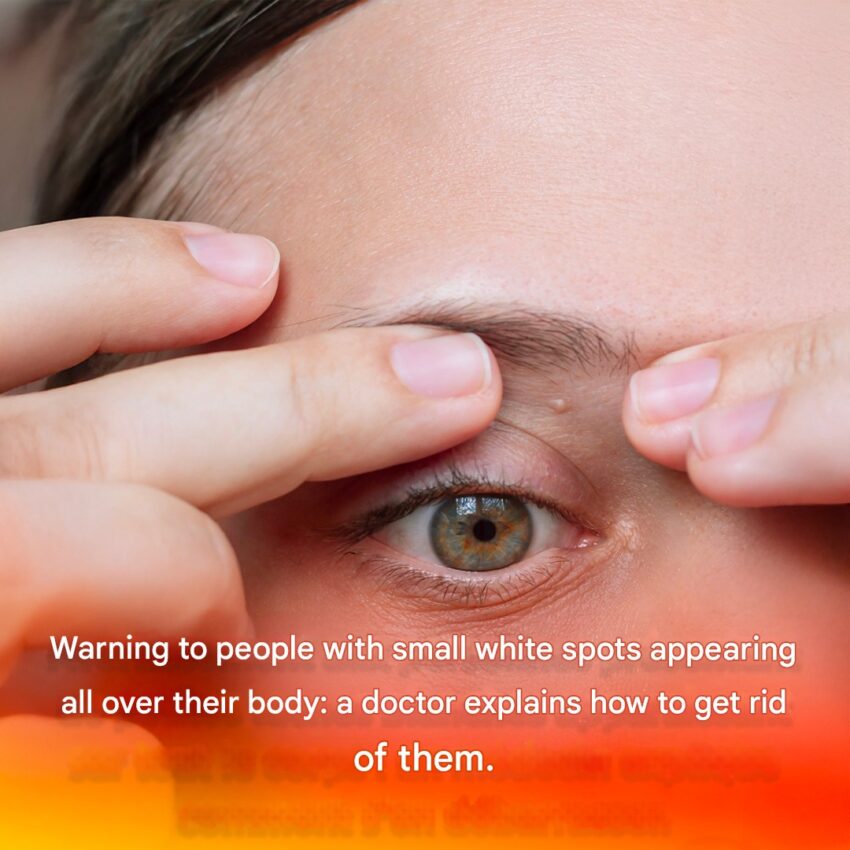
That headline sounds alarming, but “small white spots on the body” can come from several different, usually non-dangerous conditions—and the right treatment depends entirely on the cause. There isn’t one universal “doctor trick” to get rid of them.
Here are the most common possibilities:
⚪ 1. Tinea versicolor (very common)
- Caused by a harmless yeast on the skin
- Shows as small white, pink, or light brown patches
- Often appears on chest, back, shoulders
- More noticeable after sun exposure
Treatment:
Antifungal creams, shampoos, or washes (often over-the-counter or prescribed)
⚪ 2. Pityriasis alba (common in kids/teens)
- Light, slightly scaly patches
- Often on face, arms
- Linked to dry skin or mild eczema
Treatment:
Moisturizers and gentle skincare; usually fades over time
⚪ 3. Vitiligo (autoimmune condition)
- Smooth white patches where pigment is lost
- Can slowly spread or stay stable
- Not contagious
Treatment:
No “quick cure,” but options include topical medications, light therapy, and dermatology care
⚪ 4. Post-inflammatory hypopigmentation
- Light spots left after a rash, cut, or irritation heals
- Skin color often returns gradually
Treatment:
Usually improves on its own; sun protection helps even out tone
⚠️ Important reality check
Be cautious with posts that claim:
- “One natural remedy eliminates all white spots”
- “Instant cure in days”
- “Doctor secret fix”
Skin conditions that look similar can have very different causes, so random treatments can actually make things worse.
🩺 When to see a doctor
It’s a good idea to get checked if:
- Spots are spreading quickly
- They are itchy, painful, or changing
- They appear suddenly without reason
- You’re unsure what they are
A dermatologist can usually identify the cause just by looking—and sometimes a simple skin test is enough.
If you want, you can describe what the spots look like (or where they are), and I can help you narrow down what’s most likely—without guessing dangerously.
