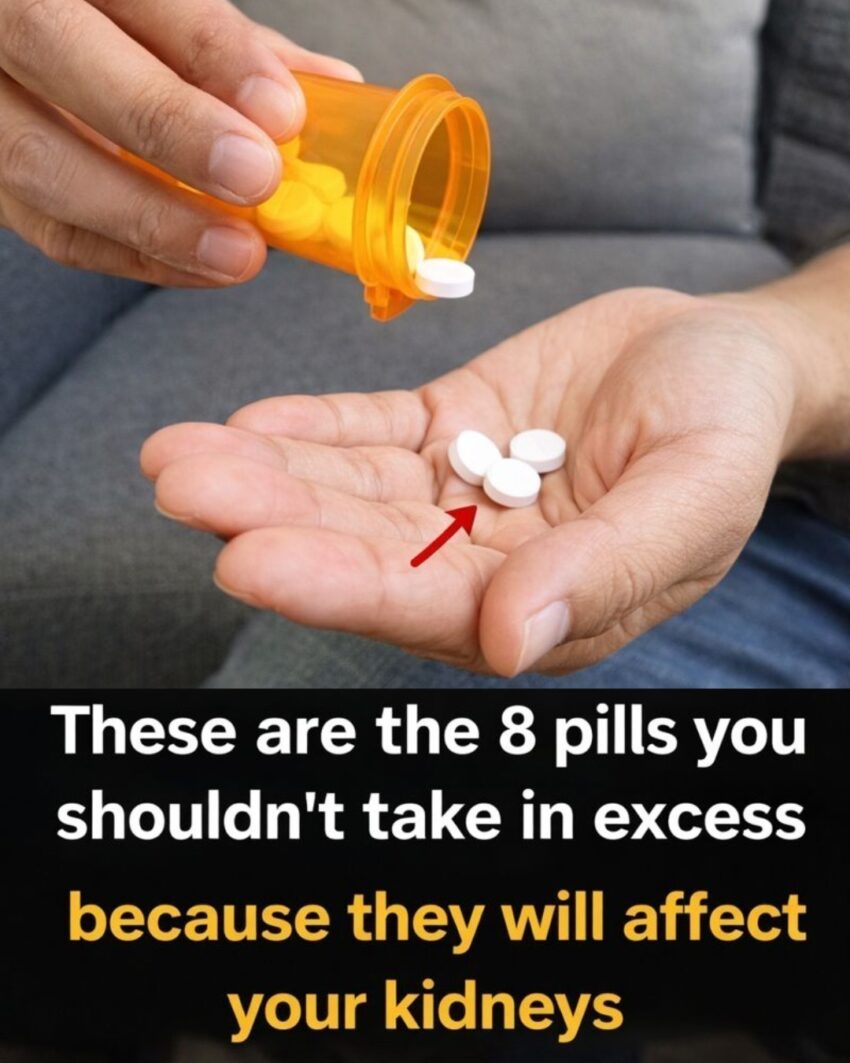
That headline is misleading and designed to create fear.
There are no “banned pills that should not be consumed” simply because they affect the kidneys. What does exist are medications that can affect kidney function in certain situations, which is why doctors monitor them carefully.
🧠 Why these medicines are still sold
Drugs remain available because:
- They are effective and often essential
- Kidney risks are usually dose- and condition-dependent
- Doctors can monitor and prevent harm
- For many people, benefits outweigh risks
💊 Common medications sometimes linked to kidney effects
1) Painkillers (NSAIDs)
Ibuprofen
Diclofenac
- Can reduce blood flow to kidneys if overused or in dehydration
- Risk increases with long-term use
2) Certain antibiotics
- Some types can stress kidneys in high doses or vulnerable patients
- Usually safe when prescribed properly
3) Acid-reducing drugs (long-term use)
Omeprazole
- Rare link to kidney inflammation with prolonged use
4) Diuretics (“water pills”)
- Affect fluid and electrolyte balance
- Require monitoring in some patients
5) Blood pressure medications
- Some can temporarily change kidney filtration
- Often protective in the long term
6) High-dose supplements
- Excess vitamin D, vitamin C, or herbal products can strain kidneys
⚠️ Who needs extra caution
- People with existing kidney disease
- Elderly patients
- Dehydrated individuals
- People taking multiple medications
🚫 What the viral claim gets wrong
- It suggests these drugs are “dangerous and shouldn’t exist”
- It ignores medical supervision and dosing
- It creates unnecessary fear around common treatments
🧩 Bottom line
These medications are not “bad”—they are widely used and important. Kidney effects are known, monitored, and manageable in medical practice.
If you want, I can tell you which everyday habits actually harm kidneys more than these medicines do—that’s usually the part people miss.
