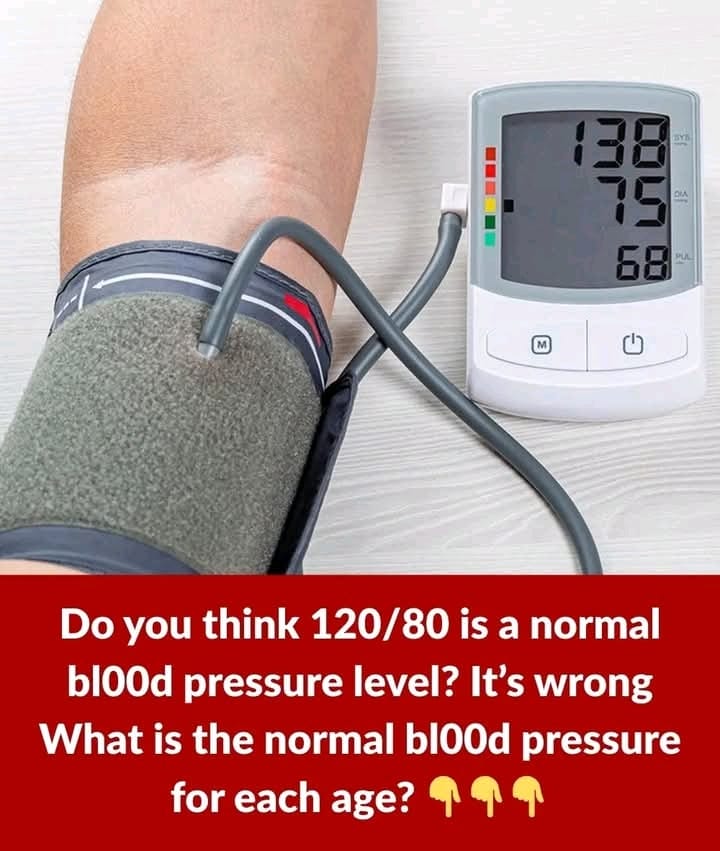
Blood pressure doesn’t have wildly different “normal” values for every age—the healthy target is actually similar for most people, but what’s typical can vary a bit as you get older.
Here’s a clear, medically grounded breakdown 👇
🩺 Standard blood pressure categories (for teens & adults)
According to groups like the American Heart Association:
- Normal: below 120/80 mmHg
- Elevated: 120–129 / below 80
- High (Hypertension Stage 1): 130–139 / 80–89
- High (Stage 2): 140+/90+
👉 These ranges apply to most adults of all ages, not just a specific group.
📊 Typical blood pressure by age (average trends)
| Age Group | Typical Average |
|---|---|
| Teens (13–19) | ~110–120 / 65–75 |
| 20s–30s | ~110–125 / 70–80 |
| 40s–50s | ~115–130 / 75–85 |
| 60+ | ~120–140 / 70–90 |
👉 As people age:
- Top number (systolic) tends to increase
- Arteries become less flexible
👶 What about children?
For kids, it’s different:
- Normal BP depends on age, height, and sex
- Doctors use charts rather than fixed numbers
Rough idea:
- Younger children often have readings like 90/60 to 110/70
⚠️ Important reality check
- “Normal for your age” does NOT mean “safe”
- For example, 140/90 may be common in older adults—but it’s still considered high blood pressure
🧠 Why keeping it normal matters
High blood pressure increases risk of:
- Stroke
- Heart attack
- Kidney disease
🟡 Bottom line
- Ideal blood pressure for most people: under 120/80
- Slight increases happen with age—but shouldn’t be ignored
- Health matters more than age averages
If you want, tell me your age and readings—I can help you interpret whether it’s healthy or needs attention.
