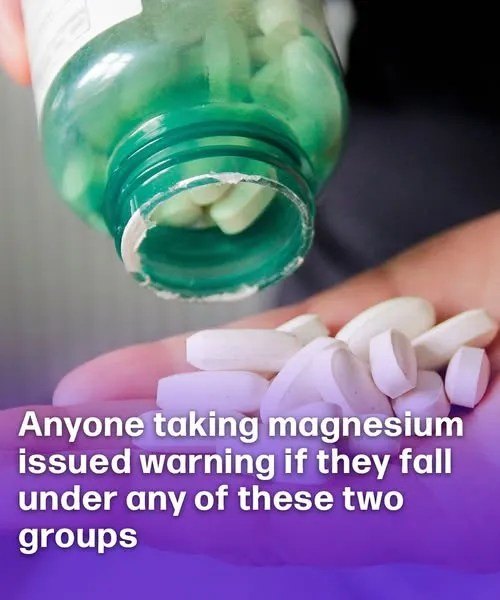
The headline “Health Experts Issue New Warning About Magnesium Supplements — Especially for These Two High-Risk Groups” is typical news-style wording that refers to a real but limited medical caution, not a general ban or emergency warning.
What experts are actually warning about
Medical sources consistently highlight that magnesium supplements are usually safe for healthy people in normal doses, but can become risky in certain cases.
The main high-risk groups
Doctors mainly warn about:
1. People with kidney disease or reduced kidney function
- Kidneys remove excess magnesium from the body.
- If they don’t work well, magnesium can build up to dangerous levels.
- This can lead to low blood pressure, irregular heartbeat, confusion, or in severe cases heart and breathing problems. (Cleveland Clinic)
2. Older adults (especially with health conditions or multiple medications)
- Kidney function naturally declines with age.
- Many elderly people also take medications that affect how the body handles minerals.
- This increases the risk of magnesium buildup or drug interactions. (Kauvery Hospital)
Important context the headlines often skip
- Magnesium from food (nuts, seeds, vegetables) is safe because excess is removed naturally.
- Problems mostly come from high-dose supplements or laxatives/antacids containing magnesium. (WIRED)
- In healthy adults, side effects are usually mild (like diarrhea) when doses are too high. (Healthline)
Bottom line
Magnesium is an essential mineral, and supplements can be helpful in some cases—but:
- It is not dangerous for most healthy people in normal doses
- The real caution is for kidney disease patients and older adults with reduced kidney function or multiple medications
If you want, I can tell you what a safe daily magnesium dose looks like and which foods already give you enough naturally.
