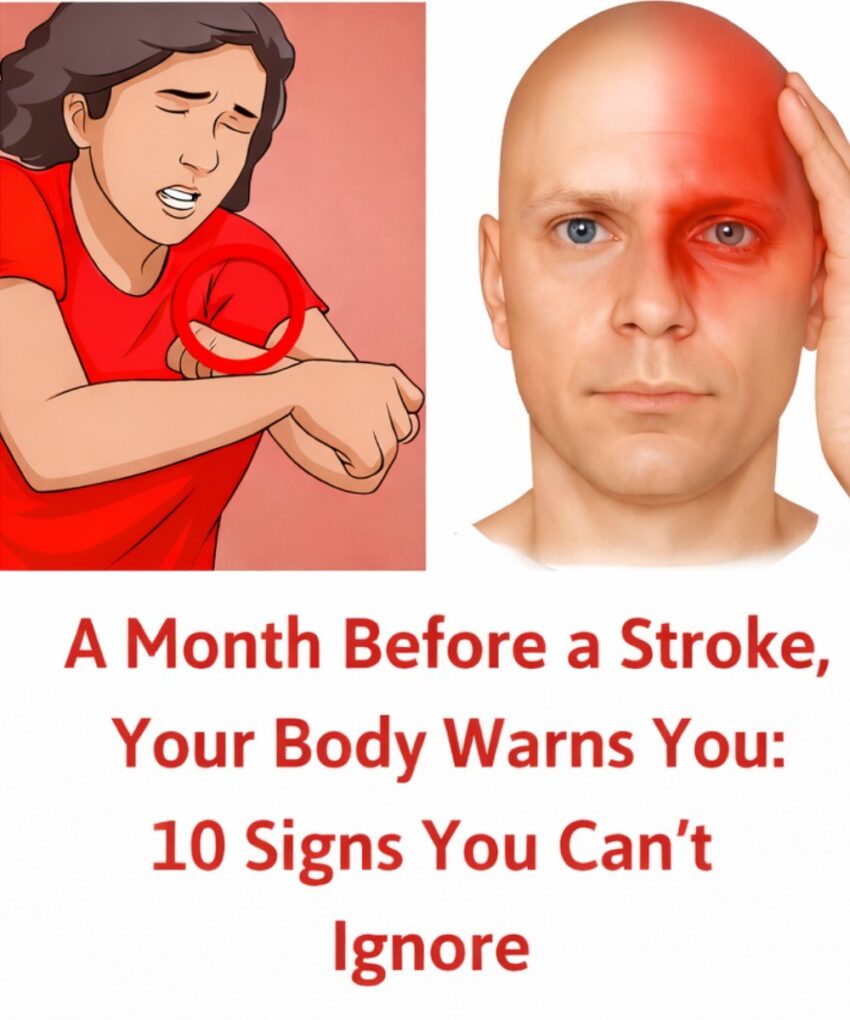
This is a fear-based health headline, and it’s important to be careful with it.
First: the reality
Stroke usually does not reliably announce itself a month in advance with a fixed list of signs. Some people may have warning symptoms, but they are often sudden or occur shortly before the event, not a predictable “10-sign checklist.”
What can happen before a stroke (in some cases)
Some people may experience warning events called TIAs (mini-strokes) or risk-related symptoms, such as:
- sudden weakness or numbness (face, arm, or leg—especially one side)
- trouble speaking or understanding speech
- sudden vision changes
- unexplained dizziness or loss of balance
- severe, unusual headache
These symptoms can happen hours, days, or sometimes weeks before, but not in a consistent “1-month warning system.”
Why these posts are misleading
- They list common symptoms (like fatigue or headaches) that have many other causes
- They imply certainty (“10 signs = stroke coming”) which is not medically accurate
- They often aim to scare readers into clicking or sharing
What actually matters most
The real stroke warning signs are sudden and urgent. A useful reminder is:
FAST
- Face drooping
- Arm weakness
- Speech difficulty
- Time to call emergency help
Bottom line
There is no guaranteed early warning checklist a month before a stroke, but there are serious symptoms that should never be ignored—especially sudden neurological changes.
If you want, I can break down which symptoms are actually emergencies vs. common harmless issues (like stress or headaches).
