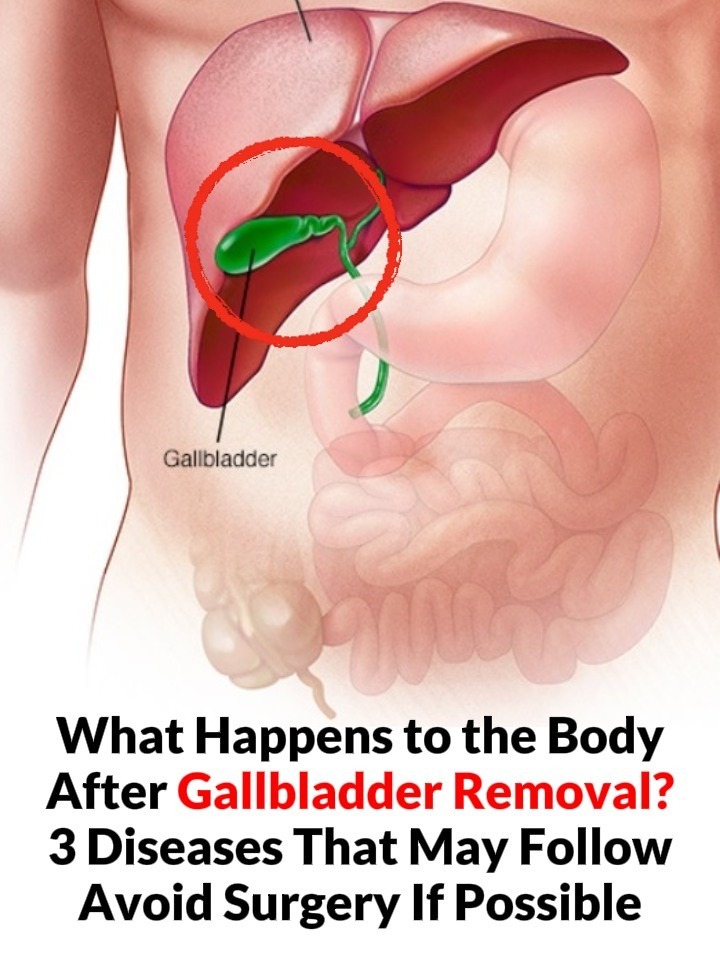
That headline is misleading and fear-based. Gallbladder removal (cholecystectomy) is a very common and generally safe surgery, and for many people it is medically necessary.
Let’s separate fact from fear.
🫀 What the gallbladder does
The gallbladder stores bile (a digestive fluid) that helps break down fats.
When it’s removed:
- Your liver still makes bile
- Bile just flows directly into the intestine
So digestion continues—just slightly differently.
⚠️ What can happen AFTER gallbladder removal (real effects)
Most people recover well, but some may experience:
1. 💩 Digestive changes
- Loose stools or diarrhea (especially after fatty meals)
- Bloating or gas
Usually improves over weeks to months.
2. 🍔 Fat sensitivity
- Fatty foods may feel harder to digest at first
- Many people adjust by eating smaller, lower-fat meals
3. 🔄 Bile reflux (less common)
- Bile can irritate the stomach in some cases
- May cause burning or discomfort
🧠 About “3 diseases that may follow”
Clickbait posts often claim gallbladder removal causes serious diseases, but:
👉 Large medical studies do NOT show a direct cause-and-effect link to major diseases like cancer or chronic illness in most people.
Some rare or debated associations include:
- Ongoing digestive symptoms in a small group (post-cholecystectomy syndrome)
- Slight changes in gut bile flow (usually manageable)
But these are not reasons to avoid necessary surgery.
🚨 When gallbladder removal IS needed
Doctors recommend surgery when:
- Gallstones cause repeated pain
- Infection or inflammation (cholecystitis)
- Blocked bile ducts
- Risk of complications is high
Delaying needed surgery can actually be more dangerous.
👍 Bottom line
- Gallbladder removal is common and safe
- Most people live normal lives afterward
- Mild digestion changes can happen but are usually manageable
- Fear-based “avoid surgery if possible” claims are misleading
If you want, I can also explain:
- What to eat after gallbladder removal
- How to reduce diarrhea after surgery
- Or natural ways to manage gallstones before surgery decisions (medically safe info)
