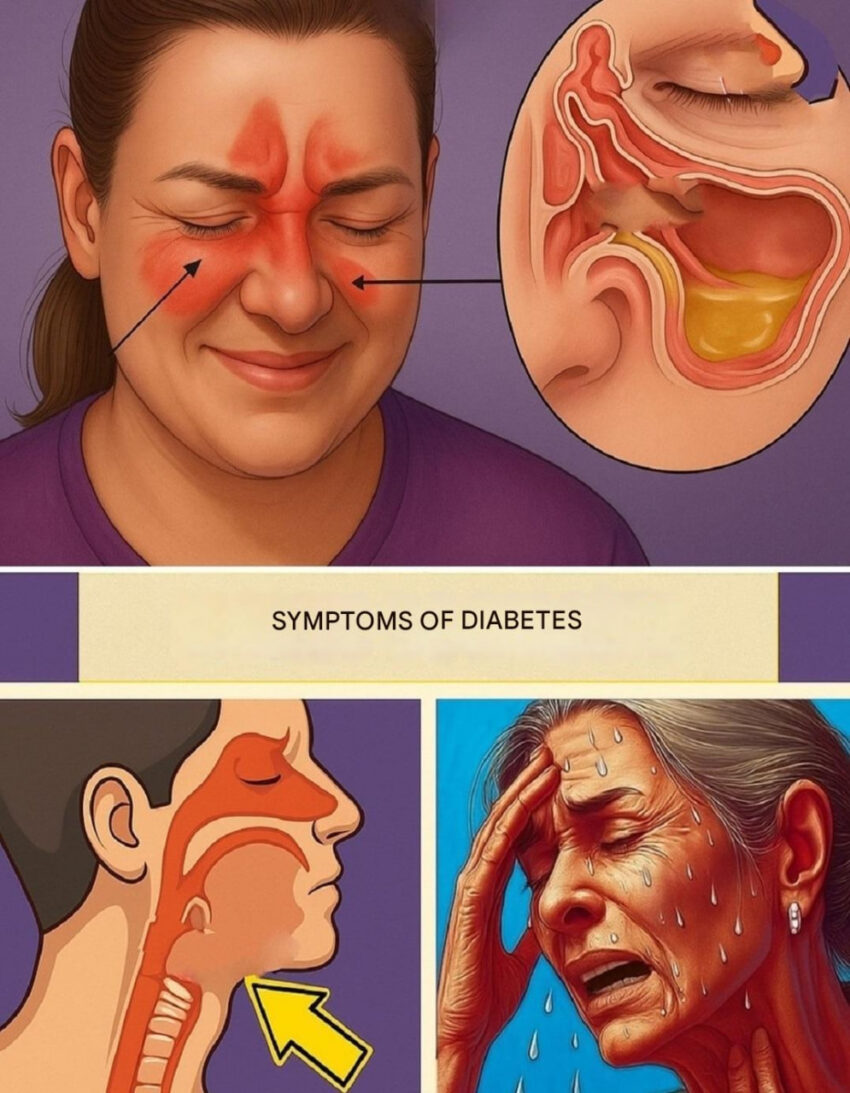
Here’s a clear and thorough breakdown of common symptoms of diabetes, covering both type 1 and type 2. Recognizing these early can help with timely diagnosis and management.
1. Increased Thirst and Frequent Urination
- High blood sugar levels make your body pull fluid from tissues, causing dehydration.
- This leads to increased thirst (polydipsia) and more frequent urination (polyuria).
2. Extreme Hunger
- Even after eating, the body may not get enough energy from glucose entering cells.
- This causes constant hunger (polyphagia).
3. Unexplained Weight Loss
- The body starts breaking down muscle and fat for energy if it can’t use glucose properly.
- More common in type 1 diabetes, but can happen in type 2 as well.
4. Fatigue
- When cells don’t get enough glucose, your body feels constantly tired or weak.
5. Blurred Vision
- High blood sugar can cause fluid to shift in the lens of the eye, affecting focus.
- Persistent hyperglycemia can lead to diabetic retinopathy over time.
6. Slow-Healing Sores or Frequent Infections
- Diabetes can impair blood circulation and immune response, making cuts, bruises, or infections slow to heal.
7. Tingling or Numbness
- Peripheral neuropathy can occur with high blood sugar, causing pins-and-needles sensations in hands or feet.
8. Darkened Skin Areas
- Acanthosis nigricans—dark, velvety patches on the neck, armpits, or groin—can signal insulin resistance, a precursor to type 2 diabetes.
⚠️ Important Notes
- Type 1 diabetes usually develops quickly and is more severe in children/young adults.
- Type 2 diabetes often develops gradually; symptoms can be mild or unnoticed.
- If you or someone you know experiences any combination of these symptoms, it’s important to see a healthcare provider for blood sugar testing.
If you want, I can also make a quick checklist of diabetes warning signs that’s easy to remember for daily health monitoring. It’s perfect for teens and adults alike. Do you want me to do that?
